Dealing with War – in the eyes of Speeches by Winston Churchill and Tony Blair

The primary conspicuous similarity of these leaders was the fact that they were both faced with ruthless opposition; Churchill with Hitler and Blair with Hussein. If Blair and Churchill were the righteous democratic free willed chiefs, the other leaders had to be ones where only banishment to the fiery depths was the only option. Equally, Blair and Churchill both refer to their adversaries as ‘tyrants’; men opposed to the rules of law and dignity of the human race. Churchill says Hitler’s regime is a ‘monstrous tyranny’. These words show power over others is what makes a monster and Hitler’s behavior as a human is like a monster when he indulged in his impulse for cruelty and domination. Hitler is like a monstrous minotaur; a guardian of hell seen in Dante’s L’Inferno. Likewise, Blair alludes to the word tyrant when he calls Husain’s leadership a ‘tyrannical regime’. Husain’s regime, Blair says, is a ‘begetter of chaos’. The English public is meant to see this tyrant’s prolonged existence leading to chaos as an abyss where a formless state of the world is to be had. From both British leaders’ statements, people are meant to feel a certain kind loathing for both of the harsh oppressors. Comparably, these two Prime Minister’s adversaries are the lowest form of life where only disfigured ideas will come from them.
Moreover, the darker the picture these two orators portray the more disgust there is for their opponents’ ways. Churchill calls Hitler’s evil days as ‘never surpassed in the dark, lamentable catalogue of human crime’. These are grim facts that justify the right to stop this despicable onslaught against human existence. By a similar measure, Blair goes into detail as he attacks the rule of Husain as he expresses his repulsion to ‘the brutality of the repression’ with ‘barbaric prisons’ in the face of ‘pitiless terror’. Blair’s speech has details to justify the severity of the terror while Churchill’s few words hit hard.
In spite of the similarities, these two speeches, coming at a time when a decision had to be made as the public waited in anticipation, do differ. Churchill is the one that becomes the major speaker showing his capability as a rebel rouser.
So, by contrast, Churchill generates more of a powerful speech. His country is at war and he needs to find moral boosting rhetoric to implore everyone to be with him. He uses short phrases to make his delivery work by way of hypophora where he raises a question and immediately answers it. This elevates his rhetoric. He says ‘What is our aim?’ and his answer is ‘Victory’. He also increases this rhetoric by the repetition of the word ‘Victory’ within four subsequent phrases that reinforces his answer on how the war will be won. This is opposed to Blair’s speech as there is the feeling he is opposed to going straight to war as with words ‘we consulted inspectors’, and the resentment to Husain ‘still countries hesitated’. He actually uses some irony as he says ‘our own aim to placate is implacable’. Blair is against a terrible system of terror and wants to stop any form of it although Hussain has been allowed to purport his methods of controlling his country and threatening the world. Blair continually tells us that Husain has had so many warnings saying countries have just been having a ‘diplomatic dance’ with Hussain. Blair is also dissimilar to Churchill in that he will bring on war with Husain but only with the help of allied countries. In contrast, the feeling is that Churchill was declaring his battle against Hitler on his own albeit with help if others were to follow. Blair would inevitably not invade Iraq without help; however, Churchill knew his own mission.
To conclude these two speeches had two leaders at the early stages of war. They differ in many ways, but similarly, show two leaders with forthright ideas and plans for action. Winston Churchill showed his great oratory skills; his concise and succinct style had a quality of putting fire in everyone’s belly to move forward with him. His sound bite skills showed he was more effective than the drawn out dialogue of Tony Blair. Tony Blair’s long speech brought to light that he had so much to consider as to whether he should go to war, and his war decisions were not ultimately all his. This essay has highlighted the comparing and contrasting styles of language from these two British Prime Ministers and shown how they went about getting their message across to their country and the world.
(979 Words)
References/Works Cited
1Minotaur, Circle 7, cantos 12-17, University of Texas at Austin, Retrieved 6July 2011, from: http://danteworlds.laits.utexas.edu/circle7.html
2Dante Alighieri, The Inferno, trans. John Ciardi (Mentor Books: New York, 1954), Canto XII
3 Alliteration, dictionary.com, Retrieved 6 July 2011, from; http://dictionary.reference.com/browse/alliteration
McRae John, Boardman Roy, Reading Between the Lines (Cambridge University Press 1984) Page 31
Blair, Tony (18th March 2003) Full text: Tony Blair Speech. Guardian.co.uk. Retrieved 6 July 2011, from:
http://www.guardian.co.uk/politics/2003/mar/18/foreignpolicy.iraq1


.
Professional Development through Thoughtful and Philosophical Teaching
(997 words)
There are always areas of any profession people are in to which they feel may need change and/or improvement. Teaching is no exception. Any teacher needs to be enthused to bring light to new areas of interest in their line of work. Having read many articles on professional teacher development I came across a document that inspired me with some core beliefs. It made me read more, delve deeper, and look at a specific area of the teaching profession that I hope empowers me. The document is ‘Teaching: the Reflective Profession’. It was published by ‘The General Teaching Council for Northern Ireland (GTCNI)’ to show competence for reflection and discussion. It was written to address the issues and recognise the complexities of teaching. In this appraisal, I will address how this document gave me an insight into an area I feel may be missed by teachers in their daily toil.
To begin with, one true fact is that children need to develop not just as ‘rounded individuals able to prosper in the world but, as importantly, to live together in a culture characterised by tolerance and respect for diversity’. These words speak volumes when I consider the position and the factors I face every day with my school. From observations of various teachers in my school, I feel, they do not, in reality, recognise their students’ true needs for the outside world they will be entering. The teacher is usually sat at a desk. A microphone is always used because the students are so loud. The students are there solely as listeners in nearly every subject. The situation reminds me of Charles Dickens ‘Hard Times’ where the students were learned facts and imagination were not on the syllabus. There seems to be no thought process involved. I see students turning off, then, just copying other people’s work to get a mark. I feel it is a culture of, ‘It’s there if you want it’ mentality. The brighter kids are at the front and the ones that really need help are at the back where there left behind. This cannot help them to survive in the real world. The students are only worried about final marks not what went into getting that mark, be it copying or cheating.
The feeling I get is that every teacher has to have an ethical basis and moral purpose to their teaching work. This means involving all the students with challenging material and getting them interested in learning. In many ways, they need to learn about how to learn. The documents state teachers should be ‘prepared to experiment with the unfamiliar and learn from their experiences’. Varying the strategies in teaching highlights the adaptability of teaching and the students’ abilities. It is true that each student’s learning and abilities differ. I also feel that the teacher’s integrity relies on the fact that variation not only makes the classroom an interesting place to be, but also the students feel a sense of worth and power their learning. This, in turn, develops the power of knowledge and creative minds. To be a true teacher your moral conscious should ask you, am I just doing a mundane job or am I creating a learning experience that not only interests you but also the students?
Moreover, Christopher Day in A Passion for Teaching reminds us that ‘Teachers, now, are potentially the single most important asset in the achievement of a democratically just learning society.’ He goes on to confirm that a central part of our mission is to develop and sustain within our pupils a sense of self-worth and to create for them an understanding as to present and future possibilities. The General Teaching Council for Northern Ireland (GTCNI) emphasises the integrity of a teacher valuing each student’s needs and value of education that pushes and challenges them. This enlightens me to my teaching not only as an educator but also a moral agent. A teacher as a moral agent opened my thinking because I have put so much work and study into my teaching. At the same time, I feel I have not given much of that time to recognise the moral and social purpose I hold within the school and community at large. I realise you have to be a responsible educator who wants to help shape young minds and impart moral values. My integrity, as a teacher, must also rely on the fact that I see an educational potential and development in every student. The Charter for Education states ‘education is the path to self-realisation, personal fulfillment, civic well being and economic prosperity’. This statement goes beyond what a teacher I think could be constrained with, within a curriculum. A teacher’s moral commitment allows him or her to see any student as a person who is growing up in the world. This person needs to be taught to, not only learn and value learning but also him/herself as a person. They need to see school not just as a place they are sent by their parents. The teacher as an educator has to apply a code that realises all aspects of life. This will get the students ready for the world far beyond life in school. The GTCNI’s document proposes ‘creative and innovative approaches’. They want pupils to ‘think creatively’. I strongly feel that a teacher as a moral agent must realise this purpose in education. This allows the students to feel as they are worth their place in the school and class and the world they live in.
In the appraisal, I feel I have shown how a deeper understanding is needed to push the teacher forward with moral purpose. This, I think, gives the teacher a greater role as an educator not just as a teacher. There is a reason students come to school and that is to better themselves. This means the whole person and it is the (teacher) educator who as the wiser must adhere to the highest principles.
References
Christopher Day, A Passion for Teaching, published by RoutledgeFalmer (www.routledgefalmer.com).


General Teaching Council for Northern Ireland
Teaching – The Reflective profession
Available from http://www.gtcni.org.uk/uploads/docs/GTCNI_Comp_Bmrk%20%20Aug%2007.pdf
Hard Times- For These Times. is a novel by Charles Dickens, first published in 1854


.
‘Too Fat To Fly!’ or ‘Too Fat To Fly?’
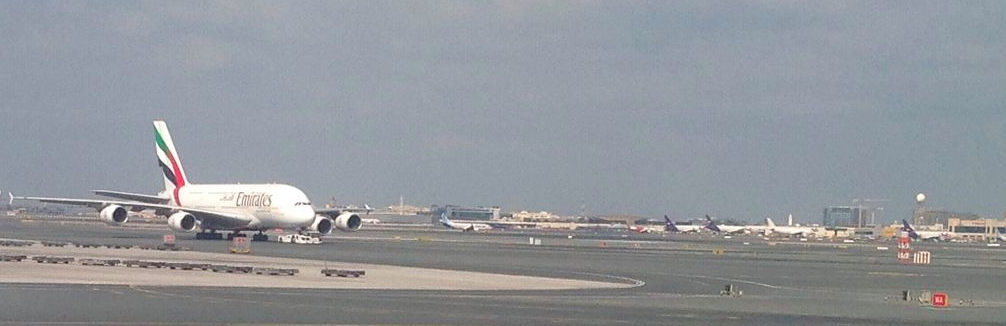
Situation: Oversized man, Kevin Smith, thrown off a flight for infringing on another seat.
Question: How would you have handled this situation if you were the Southwest Airline director?
Firstly let’s look at the facts that Mr. Smith originally purchased two tickets for two seats next to each other, so he was aware of the policy with regard to oversized people. He was known to purchase two seats as he had done before with the same airline. He decided to fly standby on an earlier flight. The earlier flight had only one seat. He was seated on the earlier flight before ground staff asked him to leave. He flew back on his later flight.
If I were the director, my initial thoughts would be to look at both sides of the story. It is not a very nice experience to be taken off any flight but the passenger should be aware of all the evidence in this case. There seems to be a bit of confusion as to whether the passenger mentioned to ground staff on the earlier flight that he usually bought two seats and that he had changed to standby thereby moving his flight to an earlier time. He also boarded the plane aware that he had just one ticket. There are also factors involving the ground staff who should have been aware that his size may have created problems. They should have highlighted that the airline will refuse to transport or remove at any point any passenger where the safety and comfort of other passengers is compromised and who is also unable to sit in the seat with the seat belt fastened and the armrest down. Also, the ticket issuer should have noticed his size and made him aware of the airline policy before issuing his earlier flight.
I refer back again to the passenger’s previous flight where he bought two seats. This complies with Southwest airline policy. He must have known that when changing his flight that there was a very high potential that being a standby flight there would only be a few seats spare. He must have known that there was a fair chance that he would not be able to purchase two seats next to each other on a flight that was fully booked. As with any waiting standby passenger, the airline does not really know how many spare seats there will be until the last call for passengers is made at the boarding dock. Mr. Smith must have been aware of this as he waited for his standby flight. Southwest also airlines wonders why he never mentioned in the whole time until he sat in his seat on the flight that he needed two seats and this was how he usually flew on Southwest.
As an airline, we also should share a little of the responsibility as staff should be aware of the company’s clear policy on overweight people. Any passenger who is overweight should be highlighted to the fact that if he or she goes onto the plane and due to their size this person encroaches on the adjacent seat they will be removed from the aircraft. This is the airline’s policy is clear and every individual no matter who they are must follow these rules.
In this situation, the company was right to remove this man and due to the fact he was already booked on a later flight with two seats his travel plans were not harmed. It is a shame this man has used his notoriety to criticize our company but Southwest airline’s seating policy is clear. Southwest airlines need to think of all the passengers being safe and comfortable. Hopefully, this situation has highlighted the company’s policy and made all members of staff aware of the policy and problems that can arise from having to remove people from any aircraft.
(642 Words)
What happens when you are the tourist attraction?
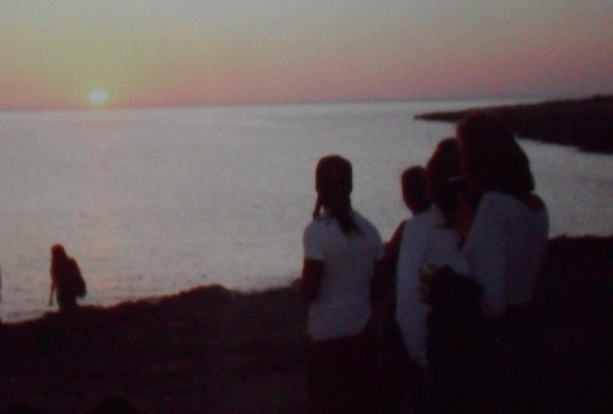
I have now been living in Ibiza in Spain for two years. I used to live in England in the countryside, so this little island off the coast of Spain is a little different. I live in San Antonio which is what you would call a fishing port transformed. It is still not that big, but there are still lots of hotels. The major attraction here are the nightclubs, and in high season the influx of young Europeans is tremendous. From an idyllic fishing port, it turns into the party capital of Europe.
So, who could deny Ibiza as the party capital, it has twenty-four-hour nightclubs and nonstop partying lifestyle? As one club closes another one opens. You end up coming out of a dark nightclub at 6 a.m. into the bright sunlight only to go to another full-on rave that opens at 7 a.m. If that’s not all, nightclubs here also have foam parties, waterfalls and swimming pools with some having no roof where you can see the stars as you dance. These club meccas attract all the best disc jockeys from around the word, so who would not want to come?
My feeling for all these tourists is one of excitement. As I walk to work in one of the bars on the sea-front, I am enthused by their energy and spirit of these young ravers to enjoy themselves. You see them all lounging around at 7 a.m. in the morning after a night of enjoyment, and I laugh at their general disregard for a decent night’s sleep. This is what having a good time is all about, they are living life to the full.
As with any destination though, once it becomes popular, it suddenly gets packed and Ibiza is no different. My bar has so many people of an evening watching the sunset, it’s hard for many of these people to buy a drink and relax. We also have a little bit of trouble now and then, when some nights a fight starts. Imagine it… there are only five staff members and nearly two hundred people. We can not stop this. We also have the police come over from time to time because a few residents complain. We try to close at 3 a.m. but with so many people sometimes it’s hard to keep them quiet.
Downtown is no different, it’s great to see all these people, but you sometimes wonder why they would want to be with so many people from their own country. Some of them actually eat the same food and do the same as what they do at home, and in their rooms watch television programs from their own country. You wonder if they realise they are in a different country.
I can not complain though because all the people bring a great atmosphere to the local town, and it is great to meet new people from all over the world because on the whole they are all well behaved and have only come to enjoy each others company. Also, my bar would not make any money without them!!!!
(517 Words)

