‘Too Fat To Fly!’ or ‘Too Fat To Fly?’

Situation: Oversized man, Kevin Smith, thrown off a flight for infringing on another seat.
Question: How would you have handled this situation if you were the Southwest Airline director?
Firstly let’s look at the facts that Mr. Smith originally purchased two tickets for two seats next to each other, so he was aware of the policy with regard to oversized people. He was known to purchase two seats as he had done before with the same airline. He decided to fly standby on an earlier flight. The earlier flight had only one seat. He was seated on the earlier flight before ground staff asked him to leave. He flew back on his later flight.
If I were the director, my initial thoughts would be to look at both sides of the story. It is not a very nice experience to be taken off any flight but the passenger should be aware of all the evidence in this case. There seems to be a bit of confusion as to whether the passenger mentioned to ground staff on the earlier flight that he usually bought two seats and that he had changed to standby thereby moving his flight to an earlier time. He also boarded the plane aware that he had just one ticket. There are also factors involving the ground staff who should have been aware that his size may have created problems. They should have highlighted that the airline will refuse to transport or remove at any point any passenger where the safety and comfort of other passengers is compromised and who is also unable to sit in the seat with the seat belt fastened and the armrest down. Also, the ticket issuer should have noticed his size and made him aware of the airline policy before issuing his earlier flight.
I refer back again to the passenger’s previous flight where he bought two seats. This complies with Southwest airline policy. He must have known that when changing his flight that there was a very high potential that being a standby flight there would only be a few seats spare. He must have known that there was a fair chance that he would not be able to purchase two seats next to each other on a flight that was fully booked. As with any waiting standby passenger, the airline does not really know how many spare seats there will be until the last call for passengers is made at the boarding dock. Mr. Smith must have been aware of this as he waited for his standby flight. Southwest also airlines wonders why he never mentioned in the whole time until he sat in his seat on the flight that he needed two seats and this was how he usually flew on Southwest.
As an airline, we also should share a little of the responsibility as staff should be aware of the company’s clear policy on overweight people. Any passenger who is overweight should be highlighted to the fact that if he or she goes onto the plane and due to their size this person encroaches on the adjacent seat they will be removed from the aircraft. This is the airline’s policy is clear and every individual no matter who they are must follow these rules.
In this situation, the company was right to remove this man and due to the fact he was already booked on a later flight with two seats his travel plans were not harmed. It is a shame this man has used his notoriety to criticize our company but Southwest airline’s seating policy is clear. Southwest airlines need to think of all the passengers being safe and comfortable. Hopefully, this situation has highlighted the company’s policy and made all members of staff aware of the policy and problems that can arise from having to remove people from any aircraft.
(642 Words)
What happens when you are the tourist attraction?
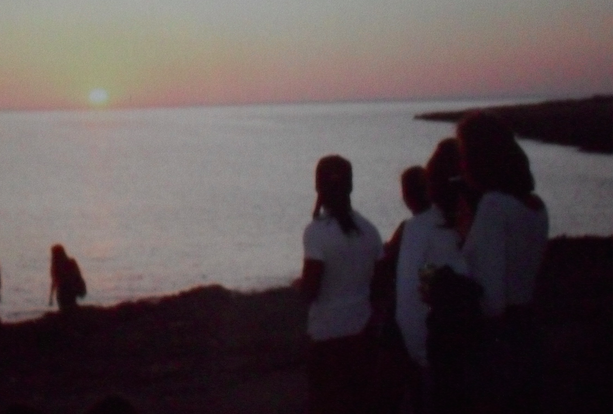
I have now been living in Ibiza in Spain for two years. I used to live in England in the countryside, so this little island off the coast of Spain is a little different. I live in San Antonio which is what you would call a fishing port transformed. It is still not that big, but there are still lots of hotels. The major attraction here are the nightclubs, and in high season the influx of young Europeans is tremendous. From an idyllic fishing port, it turns into the party capital of Europe.
So, who could deny Ibiza as the party capital, it has twenty-four-hour nightclubs and nonstop partying lifestyle? As one club closes another one opens. You end up coming out of a dark nightclub at 6 a.m. into the bright sunlight only to go to another full-on rave that opens at 7 a.m. If that’s not all, nightclubs here also have foam parties, waterfalls and swimming pools with some having no roof where you can see the stars as you dance. These club meccas attract all the best disc jockeys from around the word, so who would not want to come?
My feeling for all these tourists is one of excitement. As I walk to work in one of the bars on the sea-front, I am enthused by their energy and spirit of these young ravers to enjoy themselves. You see them all lounging around at 7 a.m. in the morning after a night of enjoyment, and I laugh at their general disregard for a decent night’s sleep. This is what having a good time is all about, they are living life to the full.
As with any destination though, once it becomes popular, it suddenly gets packed and Ibiza is no different. My bar has so many people of an evening watching the sunset, it’s hard for many of these people to buy a drink and relax. We also have a little bit of trouble now and then, when some nights a fight starts. Imagine it… there are only five staff members and nearly two hundred people. We can not stop this. We also have the police come over from time to time because a few residents complain. We try to close at 3 a.m. but with so many people sometimes it’s hard to keep them quiet.
Downtown is no different, it’s great to see all these people, but you sometimes wonder why they would want to be with so many people from their own country. Some of them actually eat the same food and do the same as what they do at home, and in their rooms watch television programs from their own country. You wonder if they realise they are in a different country.
I can not complain though because all the people bring a great atmosphere to the local town, and it is great to meet new people from all over the world because on the whole they are all well behaved and have only come to enjoy each others company. Also, my bar would not make any money without them!!!!
(517 Words)
Destinations in Decline

(640 Words)
Any sustainable holiday destination must be nurtured not only through continuous maintenance but also through the recognition of emerging trends and the implementation of appropriate improvements. These are some of the challenges that every tourism destination must address. The tourism life cycle of any holiday town or city is subject to variation, meaning that periods of stagnation can occur alongside periods of significant development and growth. There is also the constant emergence of new destinations that can capture tourists’ interest almost immediately. Consequently, established resorts must continually evaluate their position and adapt accordingly in order to remain competitive while other destinations continue to prosper. This essay will examine some of the key factors associated with the decline and rejuvenation of tourism destinations.
To begin with, recent high-profile travel destinations such as Dubai and Singapore have demonstrated how strategic tourism planning can contribute to the successful development of a destination. Theme parks, globally recognised architectural structures, and events such as Grand Prix racing have all helped to raise the profile of these destinations. Although these locations are considered high-end tourist destinations, their success demonstrates that, in order to remain competitive, tourism destinations must continue to develop, diversify, and expand. Within the tourism life cycle, some destinations may enter a period of rejuvenation, while others experience stagnation or decline.
A useful example is Benidorm in Spain. The town experienced substantial growth and became highly popular with European visitors during the late 1980s. Over time, however, it became increasingly associated with sunbathing, nightlife, and mass tourism. The natural landscape, including trees and vegetation, was significantly replaced by concrete apartment developments. This illustrates how a destination can reach a stage within its product life cycle where tourists may become less interested in an experience that is perceived as repetitive or lacking in variety.
This raises the question of who should be responsible for sustaining or revitalising tourism destinations. Political decisions can play an important role, particularly through investment strategies and policies designed to encourage foreign investment. However, it could also be argued that decisions should be made at a local level, as local knowledge can provide a better understanding of the unique qualities and characteristics that a destination can use to rejuvenate its tourism industry. Nevertheless, even local decision-making does not guarantee success. Destinations can stagnate when those responsible for development lose sight of what makes the location attractive and viable to visitors.
Moreover, Pattaya in Thailand provides another example of a destination that appears to have struggled to establish a clear tourism identity. Pattaya initially became prominent as a destination for rest and relaxation among American military personnel and subsequently developed a strong reputation for nightlife and entertainment. Although this has generated significant economic benefits, Pattaya has also introduced a range of attractions intended to appeal to families and other visitor groups beyond its traditional nightlife market. This raises the question of which target market the destination is ultimately attempting to serve.
Pattaya offers attractive beaches and a warm climate; however, Pattaya Beach itself is relatively limited in size, while further expansion is difficult. In addition, aspects of the beach environment and surrounding urban landscape may be perceived as unattractive by some visitors. These factors illustrate the difficulties faced by a destination that is attempting to diversify and develop without necessarily having a clearly defined strategy for competing with other international tourism destinations.
In conclusion, this essay has highlighted the importance of recognising that no tourist destination should take its success for granted. As with any life cycle, tourism destinations experience periods of growth, stagnation, decline, and potential rejuvenation. Modern tourists increasingly seek experiences that offer more than a traditional mass-tourism holiday, including greater variety, authenticity, and distinctive experiences. Destinations that recognise these changing expectations and adapt accordingly are more likely to remain competitive and sustainable in an increasingly dynamic global tourism market.
Inclusive Learning with Multiple Intelligences: we are all unique in our own way
(1567 Words)
‘Every child matter’ was the bold statement that put out a strong message for all teachers: a fact that subsequently continue to reverberate through inclusive learning and differentiation in the classroom in the modern day classroom. The child-focused initiative launched by the then British Labour Government in a green paper to be followed by the Children’s Act 2004 highlights that the classroom is full of individuals all with their learning abilities, methods, and idiosyncrasies. Improving and progressing, the all-inclusive learning experience for students developed further with the ‘Developing and Embedding Inclusive Policy and Practice of Higher Education’ which was launched in 2007. One example of this 2007 policy’s holistic outlook focuses on the courses that are being studied, and that the approach by teachers could be obstructing the learning of the students that do not include all individuals. Thus, teachers adapting the classes to all complements each student. This would demonstrate that inclusive learning and differentiation are paramount and are a dominant force for change that tries to give empowering success in every student. This brings forth, and the focus of this piece of writing, the ideas of the American psychologist Howard Gardner and his theory of Multiple Intelligences, from his book Frames of Mind (1983): looking after the needs of all students and their unique learning and performing methods in the classroom. Basically stated one student could work better by using their practical knowledge while another by their theoretical knowledge; recognising the fact that these two students are learning the same subject matter. I will further discuss the attributes of Multiple Intelligences highlighting first that individuals have cognitive nuances and hidden abilities, moving onto an example of a kinesthetic model that has the students actively working on the subject matter. I will then talk about creating interest for the students through their understanding of the lesson and also onto the actual students’ intelligence and the teacher underestimating them. I will finally discuss going beyond the norm for teachers and them not taking classes or the individual students for granted.
Having studied beforehand about functional skills and the embedding process in the class, at that time I was drawn to Howard Gardener‘s ideas which subsequently to this writing led me to a closer inquiry into Gardner’s theory and how different formats for the students would help with inclusive learning and differentiation. In this respect, I have increasingly become encouraged by cognitive-contextual theories. This theory deals with the way that cognitive processes operate in various environmental contexts. Thus, to explain Gardner’s theories in further detail, if we presume that each student has different learning abilities and each can acquire a subject constituent but in different ways, we can say that intelligence comprises multiple abilities. Each individual has his or her way of studying. We can break down these abilities/intelligences into categories that as a teacher can be manipulated into lesson plans as helping to achieve more from the individual students, recognising their differences. Gardener’s ideas are far reaching but from the perspective of the classroom for my classes, I feel that teachers should nurture the talents that each student holds; thus helping to produce better knowledge and understanding of the subject matter in question. This key point was highlighted also by Carol A. Tomlinson when she mentioned ‘teachers in healthy classrooms work continually to ‘tame’ their students: to see who they really are, what makes them unique in this world’ (p31. 1999). Overall, it is a focus to exploit these (in a certain way, ‘hidden’) talents that will hopefully use the concepts of Howard Gardner’s multiple intelligences, incorporated onto inclusive learning, to come to the surface. This, of course, means using differing structures in the teacher’s class that will in time show the teacher how their students are developing as a group and individuals.
Moreover, a ‘multiple intelligence (MI)’ example is bodily / kinesthetic. This is the theory that can be used to encourage students to prepare role-plays, dramatic plays, or practical tasks. It gets them off their seats interpersonally and emotionally mixing with other students. Some students will excel with this format. These kinesthetic types of people are strong in acting, using tools, and athletics. They like to move around, touch and talk. This, when used in class, gives the students social interaction. This is especially good for students who love getting up and doing. It gives them a chance to present material to their peers while appreciating the use of this language. The students can take the key subject matter and use the essence of it to translate the ideas into movement.
It is with this theory that teachers can use the knowledge gained about intelligences to spark all students into getting an understanding of the key concepts they are making in that specific lesson which the student might not get from other mundane methods. This is notwithstanding that each student will start to feel they are contributing and playing a vital role in the class’ progression that encapsulates inclusive learning and differentiation; hopefully removing competition. This will in turn help develop students’ proficiency in learning and progressing through the curriculum. It is a truth that some students can go through a lesson not realising that they are leading somewhere. If the key point is reminded to them in certain processes that encourage their talents to come to the surface, during the class they will hopefully come to realise and figure the lesson out. Hopefully, the additional stages of the lesson will be clearer to the student. It is up to the teacher to be capable of making these methods available for the students and recognising when they comprehend what is put in front of them by the teacher. The teacher is trying to get the students to process all the information they have given for the students to formulate it and understand in his or her own way. The goal is to get the students to acquire that day’s learning objectives inclusively delivered with the theory of multiple intelligences as a powerful support. It is a classic model by which to understand many aspects of human intelligence as the students begin to show their knowledge.
Furthermore, to give an example of a student’s intelligence in use, a student does poorly on the type of correlation question in a test. You could find that a possible conclusion is that the student does not reason well. Some teachers might think that the student is not capable. An equally plausible interpretation, however, is that the student does not understand the words or is unable to read them in the first place. A student seeing the analogy (valiant, faint-hearted, mollify) might be unable to solve it because of a lack of reasoning ability, but a more likely possibility is that the student does not know the meanings of the words. A cognitive analysis enables the interpreter of the test score to determine both the degree to which the poor score is due to low reasoning ability and the degree to which it is a result of not understanding the words. It is important to distinguish between the two interpretations of the low score because they have different implications for understanding the intelligence of the student. A student might be excellent at reasoning but have only a modest vocabulary or vice versa. This example is for all teachers to start research in which they find how the students react to certain classroom techniques incorporated through inclusive learning. Teachers need to see how they can raise understanding through certain tasks. Then, they can see that every student does have a talent and is capable of learning in their own way.
It could be said that the school/college systems for these students often focus on a narrow range of intelligence that involves primarily verbal/linguistic and logical/mathematical skills. Most academic knowledge is presented for learning by means of an extremely limited (or limiting) methodology and the acquisition of that knowledge is evaluated by means of rote tests, whereby the best grades are assigned to students who demonstrate the greatest ability for memorization. It is the idea that there is a single intelligence. It is this narrow-mindedness that teacher should come to realise. Multiple Intelligence theory should expand lessons to new places with experimenting. This experimenting with students’ inner intelligences can be multiple. This can include at a minimum of linguistic, logical-mathematical, spatial, musical, bodily-kinesthetic, interpersonal, and intrapersonal intelligences. The teacher will come to realise that each individual has their own talents that can shine in the classroom and other students will come to respect.
To conclude, it has been shown that recognising that each student has a unique method of comprehending what the teacher has demonstrated/shown the students. Inclusive learning means caring for everyone’s needs and no one is left behind. It has been discussed that this can be helped by a teacher using different methods to create learning environments that can change perceptions of learning not only in the students but also in the teacher. The teacher can hopefully see that potential is there where beforehand using other more methodical methods they and their classes would have failed to create that spark in students. It is also hoped the theory of multiple intelligences emphasises the creation of different methods which highlights inclusive learning and differentiation that encompasses varied skills, attitudes, abilities and potential.
References
Gardner. H, 1983. Frames of Mind – the Theory of Multiple Intelligences. Underlining and Notation Edition. Basic Books.

Higher Education Academy. 2010. Developing and embedding inclusive policy. [ONLINE] Available at:
http://www.heacademy.ac.uk/assets/documents/inclusion/DevelopingEmbeddingInclusivePolicyPractice_ReportFinal.pdf. [Accessed 28 November 12].
Tomlinson C. A, 1999. The Differentiated Classroom: Responding to the Needs of All Learners. 1 Edition. Pearson.


Reflective Essay – A Critical Incident
A “prudent understanding of variable situations with a view to what is to be done” (McCarthy, 1984, p.2) encapsulates that moment when a teacher is met with new experiences that need resolving. Teachers are met with acts that define their personalities. While working in Asia, I was faced with one such dilemma as two students had complained to my manager that I was rude to them. All I was mentioning after class (in a respectful way and in the least words possible) on the first day of a new term that they had entered the class late, ignored me, and sat down to subsequently talk with their friends. Asian culture may ignore this nonchalant kind of attitude, although I felt the need to deal with it. What is called a ‘technical rationality’ (Schon, 1983), namely my reaction, I hoped, was a means to an end by telling them in not so many words that I would like them to respect the learning students, process and the teacher teaching. In this given situation, and given they were both adults, who was right as we both had views? For this essay, I would like to like to draw on Gibbs’ (1988) six step process of reflection to examine this classroom experience.
Firstly is the ‘description’ (Gibbs, 1988) of what happened? This can be said to be the ‘critical incident’ (Flanagon, 1954) which emphasizes a direct observation of human behavior to examine the point of myself, the teacher, keeping two students behind after class to talk about their behavior towards the learning process. This is also the ‘concrete example’ (Peters, 1984) which shows that we have to step back and test ourselves. Then, the next test is my ‘feelings’ (Gibbs, 1988) towards the students’ attitude of nonchalantly arriving late and traipsing past me. I felt a bit of frustration as the class had been disturbed, myself disrespected as a teacher while not forgetting being unsupported by my manager who told me to apologize to them.
Moreover, to ‘evaluate’ (Gibbs, 1988), the third stage of Gibbs’ model, which highlights the good and bad, is first to say that I chose a quiet moment to explain myself; this being after class. The bad would be the students’ reaction to a situation they felt was not to be worried so much about which in Asian culture made them lose face. So, to make sense of the situation and thus ‘analyze’ (Gibbs, 1988) it, I was left feeling that I was in the wrong. My manager was now telling me to apologize and forget about it, although he was driven by the Asian culture and business ethics of the customer is always right and do not say anything bad.
Furthermore, the “conclusion” (Gibbs, 1988) is to highlight and reflect on what more I could have done, seeing as I had to apologize (or risk losing my job). Culture was an issue, but also I think attitudes to lateness of another teacher to which they had had the previous term was an issue. The sixth stage, my ‘action plan’ (Gibbs, 1988) is now to see if the situation arose again what I would do. Of course, there are reasons for being late, and also for reactions to negative things said about someone. Culturally, maybe I was too abrupt and too serious. Finally, laughter and a smile work in the Asian culture while also getting the students’ personal feelings as to the right behavior instead of pushing my personally held beliefs is also a factor; hopefully, we all become wiser.
(Words 591)
References
Peter Scales, 2008. Teaching in the Lifelong Learning Sector. 1 Edition. Open University Press.
Geoff Petty, 2009. Teaching Today: A Practical Guide. 4 Edition. Nelson Thornes.
Yvonne Hillier, 2005. Reflective Teaching in Further and Adult Education. 2 Edition. Continuum.
Andrew Armitage, 2011. Developing Professional Practice, 14-19. Edition. Longman/Pearson.

