Literature
Consider the treatment of one or more of the Seven Deadly Sins
(1133 Words)
As seekers of knowledge, individuals may strive relentlessly, employing whatever means they deem necessary to achieve intellectual or spiritual enlightenment. However, the pursuit of knowledge can become excessive when it transgresses moral, theological, or human limitations. Christopher Marlowe’s Doctor Faustus dramatises precisely this tension. Faustus is an intellectual explorer whose desire for knowledge and power exceeds what is considered appropriate or permissible for human beings. His relentless pursuit of forbidden knowledge ultimately becomes an act of transgression: he embraces mortal sin and, within the play’s Christian moral framework, is condemned to Hell.
Marlowe’s Doctor Faustus engages closely with the Renaissance ideal of the ‘aspiring mind’, embodying the period’s fascination with intellectual expansion, individual ambition, and the possibility of transcending established boundaries. Faustus represents this aspiration in its most extreme form. Yet his pursuit of knowledge is characterised by a striking lack of discrimination. Rather than directing his intellectual abilities towards morally or intellectually valuable ends, he becomes fascinated by pleasure, wealth, power, and the supernatural. His response to the personification of the Seven Deadly Sins—“O, this feeds my soul”—is particularly revealing. The statement suggests that Faustus has begun to derive intellectual and emotional gratification from transgression itself. During the twenty-four years granted to him through his pact with Lucifer, he seeks experiences of every kind, seemingly embodying the Renaissance desire for exploration and discovery. Paradoxically, however, the supernatural power he acquires does not produce genuine freedom; instead, it ultimately leads to anxiety, despair, and spiritual destruction.
Foremost among Faustus’s characteristics is his ambitious desire to experience the fullest possible range of human existence. As a figure associated with Renaissance humanism, he seeks to transcend conventional limitations and enter a new intellectual and experiential world. His ambition is ultimately expressed through his desire to approach the status of a deity: “A sound magician is a mighty god.” The statement demonstrates the extent to which his intellectual curiosity has developed into an aspiration for absolute power. Faustus no longer wishes merely to understand the world; he wishes to control it. His desire therefore shifts from knowledge to mastery, revealing the dangerous consequences of an intellect that recognises no ethical boundaries.
Faustus’s declaration, “How am I glutted with conceit,” further illustrates the destructive effects of excessive pride. The language of ‘glutted’ suggests an appetite that has become excessive and insatiable, while his repeated emphasis on the first-person pronoun reinforces his egocentricity. Faustus increasingly imagines himself as autonomous and self-determining, attempting to construct his own destiny independently of conventional religious authority. His ambitions are also explicitly materialistic. He dreams of “flying to India for gold” and “ransacking the ocean for orient pearl,” revealing that his intellectual aspirations are inseparable from greed and acquisitiveness. His pursuit of knowledge therefore becomes corrupted by cupidity: what initially appears to be intellectual curiosity develops into a desire to possess wealth, pleasure, and power without limitation. His apparent liberation from conventional restrictions consequently becomes another form of enslavement—to appetite, pride, and sin.
Faustus’s rejection of human and divine limitations also resonates with the biblical condemnation of pride and covetousness. In this respect, his character can be understood through the moral framework of the Book of Psalms, particularly its association of pride, greed, and the rejection of God with spiritual corruption. Faustus similarly attempts to place himself beyond divine authority. God is effectively displaced from his intellectual universe, while his own desires become the principal measure of value. His tragedy therefore emerges not simply from his possession of supernatural power, but from his refusal to recognise any authority greater than himself. His intellectual independence becomes spiritually destructive because it is accompanied by an unwillingness to accept moral limits.
Furthermore, Faustus can be considered in relation to Aristotle’s conception of the tragic hero. In Poetics, Aristotle argues that tragedy centres upon a figure who is neither wholly virtuous nor wholly corrupt, but whose downfall arises from an error or weakness inherent in human nature. Faustus embodies this model through several interconnected flaws. His pride, his relentless intellectual curiosity, and his desire to transcend the limitations of humanity all contribute to his eventual destruction. His pride constitutes a form of hubris: he seeks to elevate himself beyond the position assigned to human beings. From a Christian perspective, his aspiration to become godlike represents an even more profound transgression, since it challenges the fundamental distinction between the human and the divine. At the same time, his restless intellect and dissatisfaction with ordinary existence prevent him from accepting the boundaries imposed by religion, morality, and mortality. His tragedy consequently emerges from the interaction between intellectual ambition and moral blindness.
Nevertheless, Faustus’s aspirations cannot be dismissed as entirely reprehensible. His desire for knowledge reflects one of the most significant intellectual characteristics of the Renaissance: the elevation of human curiosity, individual potential, and intellectual inquiry. In this respect, Faustus can be interpreted as a representative of the ‘new man’ emerging from the intellectual culture of the Middle Ages. The authority of the medieval Church, which had exercised considerable influence over intellectual and social life, was increasingly challenged by new forms of humanist thought, scientific inquiry, geographical exploration, and political individualism. The Renaissance consequently witnessed a growing emphasis on human agency and the capacity of individuals to investigate and understand the world independently.
Marlowe’s engagement with classical thought is also significant in this context. The classical world offered Renaissance thinkers alternative models of intellectual and cultural authority, while Greek literature frequently presented human beings who challenged established boundaries and confronted the power of the gods. Although Marlowe’s play is ultimately shaped by a Christian moral framework, its protagonist possesses a distinctly Renaissance fascination with inquiry, experience, and self-determination. This creates a fundamental tension at the centre of the drama: Faustus embodies the intellectual freedom of the Renaissance while simultaneously being judged according to the theological values of the medieval Christian worldview.
Ultimately, Marlowe presents Faustus as a quintessentially Renaissance figure whose intellectual ambition develops into an ultimately destructive desire for absolute knowledge and power. He surveys a world whose horizons appear to be expanding through geographical exploration, scientific inquiry, and renewed engagement with classical learning. His aspiration to exceed conventional human limitations is therefore both admirable and dangerous. Faustus represents the possibility of intellectual liberation, but he also demonstrates the consequences of pursuing that liberation without ethical restraint. His tragedy lies precisely in this contradiction: he possesses the curiosity and ambition associated with the Renaissance ‘aspiring mind’, yet his inability to reconcile those aspirations with the moral limitations of his Christian world leads ultimately to his damnation. In this sense, Doctor Faustus concludes with a distinctly medieval warning about the dangers of Renaissance ambition: the desire to know more may be intellectually admirable, but when knowledge becomes indistinguishable from pride, greed, and the desire for godlike power, aspiration becomes transgression.
Comments on Little Black Boy by William Blake

Blake’s poem is dramatic, that is, in the voice of a speaker other than the poet himself. This poem of Blake’s uses the Little Black Boy to narrate the poem in first person. This projects the reader clearly inside the consciousness of the boy in the poem giving us the images from the defined observer. As a result, Blake stands outside innocence and experience in a distance position. The innocence is from ‘Songs of Innocence’, Blake’s first collection of poems, to which Blake’s subject matter shows the innocent, pastoral world of childhood. This was juxtaposed with experience, which was taken from ‘Songs of Experience’, his other collection, which shows the adult world of corruption and repression, therefore, showing the two contrary states of the human soul. The ‘songs of innocence’ dramatise the naive hopes and fears that inform the lives of children, namely the ‘Little Black Boy’ who tells this didactic story about himself in this poem.
Sense and Sensibility: A summary

Sense and Sensibility by Jane Austin
(909 words)
Set around 1800 in England, this story tells of propriety and the appropriateness of people in that period of romanticism and sensibility. The story starts off with the rich Henry Dashwood on his deathbed, decreeing all his worldly goods to his son as was the rule at that time. This is very well for the son, but Henry’s two daughters Elinor and Marianne are left to make do with a humble five hundred pounds a year for their family. Their fate is worsened still by having to vacate their mansion to a smaller residence thus feelings become low as they have to lower their level of custom. Their fate is further troubled by the gentlemen that they fall for.
One such person comes into Elinor’s life before she leaves the mansion. A certain Edward Ferris, of a noble family, he spends time with Elinor, in a time when she is down. She is a little confused by his intentions, as he is not so disposed to pursue a lady even though he feels this way. Elinor still wishes them to be together although she is a lady and would not show her love so openly. Edward is also to be married off but must choose a lady of money as is the case, even though, he, as a simple man believes love does cross boundaries. The only difficulty comes when Edward is called to London just as the relationship strengthens leaving Elinor alone and confused.
The thought provoking “Anne of Green Gables”


Anne of Green Gables by Lucy Maud Montgomery
(1244 Words)
This movie takes the viewer back to the start of the 20th century; to a time when people were prim and proper and life actually seemed a little dull as there was not much imagination to lift the spirit. People just dealt with life with appropriateness. That is the picture painted as we go into the world of Mathew and Marilla Cuthbert, as they await an orphan boy they are going to adopt. The movie which was made in 1934 from a book written in 1905 must have been a great eye-opening for the public at both times; making some people do a lot of soul-searching about their attitude towards people of lesser means. As such, the film shows people’s narrow-mindedness and perception of others that can lead them to behave in strange ways without a thought to their own actions.
To begin with, the viewer is faced with Mrs. Rachel Lynde, the busybody neighbour, who is proud of her blatant self-righteous views. She sticks her nose in where it is none of her business. While gardening she notices that Matthew is dressed in a suit and off to town. She immediately goes to Morilla’s house to enquire as to this change from the norm. Marrila tells her that she intends to have an orphan boy. Mrs. Lynde’s contempt for this idea is stark and she does not mince her words, as she describes these sorts of people as ghastly creatures who will only bring sorrow for the Cuthburts.
Mythological background in literature – Dr. Phil meets Greek Gods and a Goddess
(1530 words)
I attended ‘Mythological background in literature’ classes. In these classes, I was asked to produce a presentation around Greek Gods and Goddesses. I thought up the idea of family conflict and Dr Phil discussing this with Zeus, Cronus, and Rhea. I used it as a skit to the class as you can easily do.
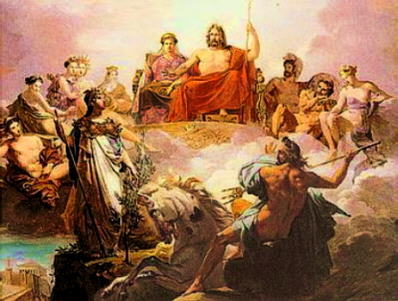
Interviewer (Dr Phil): Good morning everyone and welcome to ‘Family Dilemmas with Dr Phil’ all the way on top of Mount Olympus in Greece. On today’s program, we have the tricky matter of a family feud. In this rare exclusive for the Dr. Phil TV show, we have three family members who are not only fighting but also fighting for supremacy of the universe. It seems like a tricky dilemma but let’s hope we can help them with this problem.
To begin with and to let us into this incredible story is mother and wife, Rhea. Everyone, let‘s give her a round of applause.
Good morning Rhea.
Rhea: Good morning.
Interview: Thank you for coming to today.
Rhea: It’s quite an honour for you to be in the company of The Goddess, the mother of Gods. Do you feel the fertility?
Interviewer: Well, I have heard you are the Goddess of fertility, but I am happily married, thank you!
- ← Previous
- 1
- …
- 3
- 4
- 5
- Next →

