Holidays
Memoirs – A trip that goes astray
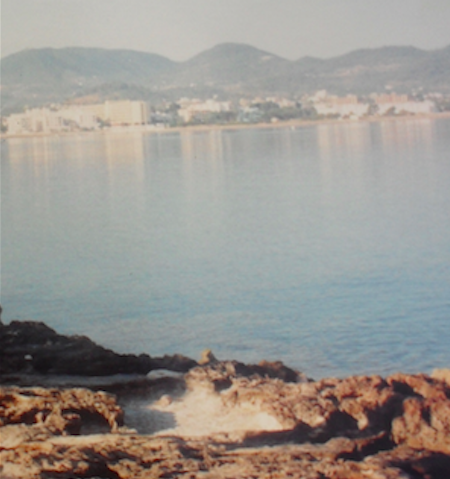
I had been partying hard on the idyllic island of Ibiza for 3 months. It was time to go home, back to England. It was either that or lose my mind to endless sleepless nights with too much drink. I had already sold my flight ticket home and was looking for the same deal. This involved using someone else’s ticket to get home. All the ticket holder had to do was check in with their passport and your bag, then you swapped. Thus, when you went through boarding, onto the plane, they only checked your ticket, ending up you went home cheaply on someone else’s ticket.
So, the ticket seller checked in my bag and showed his passport, got the boarding pass and my flight home was on. He then gave me the boarding pass, I paid him the money, and he left leaving me to catch the flight. On the way to the terminal I bumped into a girl friend of mine and told her the trick, she laughed. We both walked through the airport chatting about special Ibiza times without a care in the world.
It was now time to board, so I walked up to get on the flight. Unfortunately for me this time was like no other. The usual drill of just checking the ticket had gone, maybe they had cottoned on to the deceit. They were now checking tickets and passports together. What could I do? I had paid the money for the ticket and had to chance my luck. Moreover, I had already decided it was time to leave or risk further crazy problems. So, I walked up to the ground staff, they looked and looked again at the ticket and passport. There was a discrepancy. They pulled me to one side. My friend worryingly looked over, but there was nothing she could do.
The police arrived in no time, I was in trouble. They spoke no English and marched me away; all I could do was to accept the possibility of jail. They took me down the out of the main concourse and down flights of stairs. This was a long walk, where was I going? It was all getting louder. I could see the planes. It was then that I realised this must be the plane I was supposed to be on. I was marched up to the side of the plane and lifted up to find my bag. This was found in no time; at least it felt like that. I was certainly in a daze. Now, it was time to face the consequences of my actions. I thought my next move would be in the police car and kept overnight in some rough jail. They again marched me though the airport and then through a set of doors near the exit. It was then that they pushed me away and showed me the exit. I just walked half expecting this was not my chance to go. I was now outside; I kept walking then ran a little just be free of what just happened. I jumped in a taxi and was soon back to where I started all those hours ago.
(532 Words)


What happens when you are the tourist attraction?
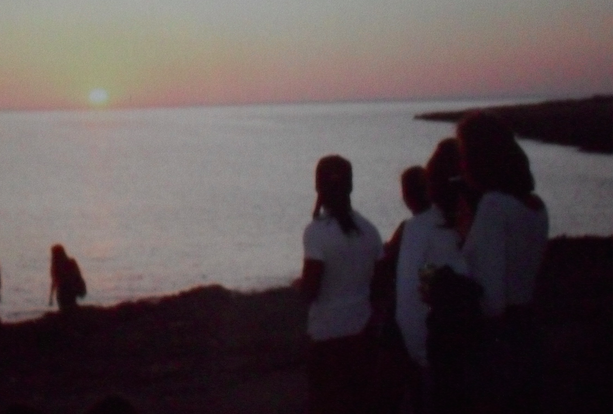
I have now been living in Ibiza in Spain for two years. I used to live in England in the countryside, so this little island off the coast of Spain is a little different. I live in San Antonio which is what you would call a fishing port transformed. It is still not that big, but there are still lots of hotels. The major attraction here are the nightclubs, and in high season the influx of young Europeans is tremendous. From an idyllic fishing port, it turns into the party capital of Europe.
So, who could deny Ibiza as the party capital, it has twenty-four-hour nightclubs and nonstop partying lifestyle? As one club closes another one opens. You end up coming out of a dark nightclub at 6 a.m. into the bright sunlight only to go to another full-on rave that opens at 7 a.m. If that’s not all, nightclubs here also have foam parties, waterfalls and swimming pools with some having no roof where you can see the stars as you dance. These club meccas attract all the best disc jockeys from around the word, so who would not want to come?
My feeling for all these tourists is one of excitement. As I walk to work in one of the bars on the sea-front, I am enthused by their energy and spirit of these young ravers to enjoy themselves. You see them all lounging around at 7 a.m. in the morning after a night of enjoyment, and I laugh at their general disregard for a decent night’s sleep. This is what having a good time is all about, they are living life to the full.
As with any destination though, once it becomes popular, it suddenly gets packed and Ibiza is no different. My bar has so many people of an evening watching the sunset, it’s hard for many of these people to buy a drink and relax. We also have a little bit of trouble now and then, when some nights a fight starts. Imagine it… there are only five staff members and nearly two hundred people. We can not stop this. We also have the police come over from time to time because a few residents complain. We try to close at 3 a.m. but with so many people sometimes it’s hard to keep them quiet.
Downtown is no different, it’s great to see all these people, but you sometimes wonder why they would want to be with so many people from their own country. Some of them actually eat the same food and do the same as what they do at home, and in their rooms watch television programs from their own country. You wonder if they realise they are in a different country.
I can not complain though because all the people bring a great atmosphere to the local town, and it is great to meet new people from all over the world because on the whole they are all well behaved and have only come to enjoy each others company. Also, my bar would not make any money without them!!!!
(517 Words)
Destinations in Decline
(640 Words)
Any sustainable holiday destination must be nurtured not only through continuous maintenance but also through the recognition of emerging trends and the implementation of appropriate improvements. These are some of the challenges that every tourism destination must address. The tourism life cycle of any holiday town or city is subject to variation, meaning that periods of stagnation can occur alongside periods of significant development and growth. There is also the constant emergence of new destinations that can capture tourists’ interest almost immediately. Consequently, established resorts must continually evaluate their position and adapt accordingly in order to remain competitive while other destinations continue to prosper. This essay will examine some of the key factors associated with the decline and rejuvenation of tourism destinations.
To begin with, recent high-profile travel destinations such as Dubai and Singapore have demonstrated how strategic tourism planning can contribute to the successful development of a destination. Theme parks, globally recognised architectural structures, and events such as Grand Prix racing have all helped to raise the profile of these destinations. Although these locations are considered high-end tourist destinations, their success demonstrates that, in order to remain competitive, tourism destinations must continue to develop, diversify, and expand. Within the tourism life cycle, some destinations may enter a period of rejuvenation, while others experience stagnation or decline.
A useful example is Benidorm in Spain. The town experienced substantial growth and became highly popular with European visitors during the late 1980s. Over time, however, it became increasingly associated with sunbathing, nightlife, and mass tourism. The natural landscape, including trees and vegetation, was significantly replaced by concrete apartment developments. This illustrates how a destination can reach a stage within its product life cycle where tourists may become less interested in an experience that is perceived as repetitive or lacking in variety.
This raises the question of who should be responsible for sustaining or revitalising tourism destinations. Political decisions can play an important role, particularly through investment strategies and policies designed to encourage foreign investment. However, it could also be argued that decisions should be made at a local level, as local knowledge can provide a better understanding of the unique qualities and characteristics that a destination can use to rejuvenate its tourism industry. Nevertheless, even local decision-making does not guarantee success. Destinations can stagnate when those responsible for development lose sight of what makes the location attractive and viable to visitors.
Moreover, Pattaya in Thailand provides another example of a destination that appears to have struggled to establish a clear tourism identity. Pattaya initially became prominent as a destination for rest and relaxation among American military personnel and subsequently developed a strong reputation for nightlife and entertainment. Although this has generated significant economic benefits, Pattaya has also introduced a range of attractions intended to appeal to families and other visitor groups beyond its traditional nightlife market. This raises the question of which target market the destination is ultimately attempting to serve.
Pattaya offers attractive beaches and a warm climate; however, Pattaya Beach itself is relatively limited in size, while further expansion is difficult. In addition, aspects of the beach environment and surrounding urban landscape may be perceived as unattractive by some visitors. These factors illustrate the difficulties faced by a destination that is attempting to diversify and develop without necessarily having a clearly defined strategy for competing with other international tourism destinations.
In conclusion, this essay has highlighted the importance of recognising that no tourist destination should take its success for granted. As with any life cycle, tourism destinations experience periods of growth, stagnation, decline, and potential rejuvenation. Modern tourists increasingly seek experiences that offer more than a traditional mass-tourism holiday, including greater variety, authenticity, and distinctive experiences. Destinations that recognise these changing expectations and adapt accordingly are more likely to remain competitive and sustainable in an increasingly dynamic global tourism market.
Information Technology and Bookings through GDS
Global distribution and reservation systems (GDS) have revolutionized the travel industry over the years. The Four Major GDS Systems Amadeus, Galileo, Sabre, and Worldspan help buyers search for the best deals for their holiday quicker and easier. On the plus side, these systems have helped consolidate the industry and make it easier for travel agents to give out prices to their customers. Travel agents use this system as a backbone for their industry. All this is well and good but with the economic downturn in the last few years plus the rise of other travel, the rise of the internet, also competition amongst GDS systems and other factors the success of global distribution of travel bookings has to be looked into. In this essay, I will discuss some of the issues relating to GDS.
To begin with, we live in times that have seen major banks and companies around the world collapse. Customers want better prices. Airlines, travel agents, hotels are also looking to cut costs while still wanting to maintain their customer base. This is the dilemma for all involved. So as times change within the industry, the advantages of GDS and competition amongst the companies involved should hopefully have the knock on effects to the customer with lower prices. There is also the case as the global slowdown happens that companies will look elsewhere by trying to get customers to book direct with them. This leaves a gap where GDS systems still need to make their money and additional costs may be added. On the other hand, these companies by avoiding using GDS systems risk losing trade with these global players. We are also faced with the concentration of power amongst these travel systems who can monopolize the market and see prices rise as a result of their control of the market through the four GDS systems.
Furthermore, the GDS players have now more to do as competition gets harder. The rise of the internet has to be the main competition for GDS. By avoiding extra cost through GDS companies can make more money. Many low-cost airlines in different countries offer seats at reduced fares by paying direct to their website. One has only got to do a search on the internet to see the array of companies offering booking information to see that competition amongst the smaller travel agents and airlines is there. The internet has also allowed people to go and make their own travel plans instead of leaving it all to a travel agent.
However, we still see that most travellers use travel agents to book their travel arrangements. Travel agents and travel destinations are now faced with what of the four GDS systems to use which highlights the future development of the major players in the GDS system as competition gets more intense to attract interest to their system. For example, travel agents are trying to reduce costs while still maintaining sales so each GDS system has to try and offer the best deals to these people. In reality, the future looks bright as GDS has to create better management and sales plan while becoming more professional to win these contracts. This also could impinge on the GDS industry as it tries to become more competitive by being more aggressive in the market. All this determined effort to be more successful may turn airline/travel agents away. We will have to wait and see
To conclude it is hard to say if any interested party will come up with a system to rival these GDS companies. Millions of dollars are now being pumped into Africa and the Arab region as contracts are signed as these GDS companies try to consolidate their interest in these regions. The only people that can stop their dominance for these distribution and reservation systems are the airline themselves. Companies like Emirates are major players in the world market for travel. Hopefully, the customers feel the benefit for the competition and not the pain as costs are pushed onto them.
Visitor Management
Visitor Management involves getting an idea of the customers that enter any tourist attraction. Management of any of these attractions has to be well thought about so people come all year round in constant numbers while wanting repeat customers. I would like, in his short essay, to highlight theme parks while giving an example in Thailand. I feel over the recent years these kinds of parks have become one the most wanted places to go to. So, with expansion, aspects such as management, marketing, and merchandising of these attractions have to be strategic in their development.
To begin with, I believe that any visit to a theme park has to be a complete experience. Any visitor has to have a range of attractions to ride and see and not only just the thrill-seeking rides. Within this the resort has to be scientific in this approach which may mean taking surveys to analyse customer’s likes and needs. What may work in America may not work in Europe or Asia. It can be easy for any Asian country to try and copy Disneyworld but only see the bigger picture and miss out on looking at the real experience for each individual who has their own idea of a good experience. This means a day where they flow around the park not being kept back and slowed down.
Of course, theme parks want to expand and make bigger rides and attractions. They advertise on the internet with polished marketing which gives the potential customer the idea of an amazing holiday. This can only sometimes show the attractions and miss the experience that the customer craves. Customer services have to be vital to the framework of the theme park. Inevitably the workforce are real people and they are doing a job but the customer does not really want to feel that. The theme park experience has to take the customers away from reality. This does not mean sanitising reality and sensitive issues. Customers still can be educated but overly done this can backfire. These decisions can not be made by a few people. It has to be a whole thought out process that involves customers, staff and management. Global issues have to be thought of too so a visit can be a learning and magical experience.
So, thinking about theme parks if I was to look at one park in Thailand and look with the eyes of a visitor manager I would choose Siam Park. This park can be pretty much empty during the week and crammed solid at the weekend and holiday time. The public can be faced with long queues kids running around everywhere and a general chaos. As a visitor manager you would want the public to flow around the site there seems to be the general idea that you pick and choose and you please. There was also the case of the staff, these were people just pressing buttons, not really forthcoming on highlighting the customer’s experience. In many cases, there would only be one person operating the ride so safety had to be thought about which does not expand the experience in a positive way. This is why visitor management has to be thought about.
- ← Previous
- 1
- 2
- 3
- Next →

