Writing
Teaching Young Learners – Writing Activities
(924 words)
For this writing task, I was asked to give my response to 5 statements about writing activities to support young learners to improve their writing and learn a language. I will answer True or False to statements 1- 5 and explain why.
1. Writing should be developed in isolation from other skillls.
Is this True or False?
2. We should not restrict the age at when children begin to write.
Is this True or False?
3. Handwriting and spelling are only part of the process of writing.
Is this True or False?
4. Attention should be paid to developing good habits in alphabet letter formation.
Is this True or False?
5. Using joined-up writing may help develop the learning of the common letter strings found in English.
Is this True or False?
- Writing should be developed in isolation from other skillls. T/F
I would say this is false. Many concrete experiences such as painting, drawing, using play-doh, dramatic play, or building with blocks help children develop the physical, cognitive, socio-emotional skills and understandings that are the foundations of conventional reading and writing. All these skills should be encouraged at home and at school from early age. It is how the learners use these experiences that are gathered to help with their writing skills. This is how literacy ‘emerges’ in children that is significant and can lead to writing. These skills are used when teachers and parents encourage ‘literacy play’ by adding notepads and pencils to the resources provided to encourage role-play and dialogue. Vocabulary can be built through games and activities that increase the range of words your child will know to write with depth. Children can learn how reading and writing are used to achieve goals. For example, at home a child might see thier grandmother following a recipe in a cookbook or watch his mother reading the directions for putting a toy together. From these observations, children learn that reading and writing are used to carry out daily tasks and to communicate and receive information.
2. We should not restrict the age at when children begin to write. T/F
This is true. From an early age, children start using a pen and pencils. Long before they go to school, before they even know the alphabet, children begin to write. In fact, for most children literacy begins at home such as with crayons. The scribbles of very young children have meaning to them, and scribbling actually helps them to develop and become familiar with holding a pen/pencil with their writing. Young children who are encouraged to draw and scribble stories will learn to write more easily, effectively, and confidently once they head off to school. Young children can learn a lot by watching someone write, imitating adults and older children, exploring, and experimenting. Literacy learning does not begin at a certain age and I think should not be limited to the classroom. It can develop significantly during the pre-school years and be influenced by social contexts as well as individual skills and applications.
3. Handwriting and spelling are only part of the process of writing. T/F
This is true. The one major fact of writing is that of putting a pen to paper. This involves the transcription aspects of writing, combining handwriting and spelling abilities with the choice of the right words, shaping these into the appropriate syntax and general organisation. Other parts of writing include emulating and exploring the different genres of writing. For example, the child can write but how do they organise their writing, and who is the audience. For a younger child chronologically, organised writing may be easier to tackle at first, such as stories and reports where what happened next provides a major prompt. Appreciation of the possibilities of different kinds of non-chronological text is a major part of writing such as descriptions classifications, explanations, and arguments. Teachers and parents can help by pointing out the distinctive features of these types of writing as opportunities arise. Teachers and parents influence the learners writing through wider reading and of being read to highlight the many facets to writing.
4. Attention should be paid to developing good habits in alphabet letter formation. T/F
This is true. It could be assumed that children’s early ‘invented’ spellings will evolve into conventional versions over time. Parents and teachers need to encourage correct hand movements for forming each letter of the alphabet from a very early age. As a learner gets exposed to more literature he will try out new hand movements. The teacher and parent’s role is to show the visually patterned nature of the English spelling system. Letters have starting points and mistakes from the start can be hard to change as time moves on. Words with time will begin to flow into each other.
5. Using joined-up writing may help develop the learning of the common letter strings found in English. T/F
This is true. How a child writes each letter relates to how they can join that letter up to the next letter. When the child makes a writing mistake for instance beginning a g at its tail, forming an e with a clockwise motion, this can quickly become habitual and can be very difficult to change. Such errors also prevent children from developing the sense of ‘flow’ in the formation of commonly occurring letter strings which are spontaneously joined by correct exit strokes leg. in. ly. ch). This kinaesthetic control over written language production is not only more efficient but is also likely to promote success in spelling.
.
The Role of Irony in Oedipus Rex
Irony plays a central role in Sophocles’ Oedipus Rex, shaping both the structure of the play and its tragic meaning. Sophocles uses dramatic irony to create a powerful contrast between what Oedipus believes to be true and what the audience already understands to be true. As Oedipus attempts to discover the murderer of King Laius, the audience knows that he is unknowingly searching for himself. This creates a sense of tension and inevitability because every step he takes towards solving the mystery brings him closer to discovering his own identity and his tragic fate. Through irony, Sophocles explores themes such as human ignorance, pride, fate, and the limitations of human knowledge.
Oedipus’ life is revealed during the hours on stage. It is difficult to think of another play in which the unity of time, as a formal property of the drama, contributes more to meaning. Every step Oedipus takes to solve the old murder mystery, every new confrontation with those he summons to appear with pieces of the past, and every one of their chance disclosures brings him closer both to the solution he seeks and to the self-discovery he does not foresee. When the last piece falls into place, the detective becomes the criminal, his success becomes his doom, his happy ignorance becomes tragic knowledge, and the evil without becomes the evil within. This summary of the plot demonstrates the heavily ironic nature of the play.
Dramatic irony operates whenever the audience is aware of some circumstance in the plot or character that gives meaning beyond, or at odds with, what the speaker consciously intends. It can also occur when a situation has a significance that the character does not recognise. The more hostile the hidden significance is to the unwitting character, and the further that character is from realising it, the more poignant the irony becomes. Sophocles uses this technique throughout Oedipus Rex to ensure that the audience understands the tragic truth long before Oedipus does.
Dramatic irony begins with the appearance of Oedipus in his kingly robes and with his first words: “I myself come hither, Oedipus, famous among all men.” The pitiful townspeople have appealed for help to the very man who is, in reality, the cause of their suffering. This creates an immediate contrast between appearance and reality. The irony is further emphasised through the character of Tiresias, who is physically blind but can see the truth, while Oedipus, who has physical sight, is blind to his own identity and actions. Oedipus welcomes the information that Creon has brought from Delphi. His optimism and determination to follow Apollo’s commands and punish Laius’ murderer are deeply ironic because the audience knows that Oedipus himself is the murderer he intends to punish.
Sophocles develops this irony further through Oedipus’ words to the citizens in Scene 1: “sick as you are, not one is as sick as I.” On one level, we hear the King expressing genuine concern for his suffering people and identifying himself with their fate. However, the statement has a second and much darker meaning. Oedipus is indeed more “sick” than the citizens because he is unknowingly responsible for the plague affecting Thebes. The audience recognises the dreadful accuracy of his words, while Oedipus remains unaware of their true significance.
This pattern of irony continues when Oedipus curses Laius’ murderer and promises to avenge the dead king “just as though I were his son.” The irony is particularly powerful because Oedipus is, in fact, connected to Laius as both his killer and his son. Similarly, Oedipus berates Tiresias for his arrogance, mocks his blindness, and accuses him of being involved in the murder. The audience understands that Tiresias is the character who truly “sees” the truth, while Oedipus remains ignorant. Sophocles therefore uses blindness as both a physical condition and a metaphor for Oedipus’ lack of self-knowledge.
Oedipus even goes further by exhorting the people to help in the search for Laius’ murderer. He proclaims a curse upon the murderer, forbids him from having contact with the Thebans, and emphasises his own determination to bring the criminal to justice. These declarations are deeply ironic because Oedipus is unknowingly placing the curse upon himself. His determination to discover the truth ultimately becomes the means by which he destroys his own life. His greatest strength — his intelligence, confidence, and determination — becomes the instrument of his downfall.
Far from being an ineffective or premature revelation of the plot, Sophocles’ use of irony engages the audience with the deeper meaning of tragedy. The irony becomes an image of the frailty of human defences, the foolishness of human feelings of security and power, and the strange inevitability of fate. Oedipus believes that he can control his destiny through intelligence and action, yet every action he takes brings him closer to the fate he is attempting to escape. His confidence can also be understood in terms of the Greek concept of hubris, meaning excessive pride or self-confidence. Oedipus believes that he possesses the knowledge and power necessary to solve any problem, but he cannot recognise the truth about himself.
The audience’s suspense is therefore different from the suspense created by not knowing the outcome. The audience already understands much of Oedipus’ fate, but we remain interested in discovering how the individual ironies will eventually connect and reveal the truth. Each revelation brings the past into the present until Oedipus can no longer deny his identity. If we fail to recognise this pattern of irony, the plot may appear to be merely a series of shocking and brutal events. However, Sophocles’ use of irony gives the events a deeper significance by showing how human beings can be trapped by their own ignorance, pride, and attempts to control their destiny.
Irony is a rhetorical device for holding different or opposite truths in suspension and for focusing attention on the discrepancy between what seems to be and what actually is. It is therefore an appropriate technique for a tragedy centred on self-ignorance. At the beginning of the play, Oedipus has a clear and single purpose: to find Laius’ murderer. Later, he begins to investigate his own parentage. The obvious irony is that this wise and self-assured man does not realise that his purpose has changed. The deeper irony, however, is that his purpose has not really changed at all, because the answer to the question of whose son he is will also answer the question of who killed Laius. His search for the murderer and his search for his identity are ultimately the same quest. Pride motivates both, as Oedipus is determined to prove that he can uncover the truth regardless of the consequences.
In conclusion, irony is essential to the meaning and tragic impact of Oedipus Rex. Sophocles uses dramatic irony to create a constant gap between Oedipus’ understanding of events and the audience’s knowledge of the truth. Oedipus believes himself to be a powerful and intelligent king who can save Thebes, yet the audience knows that he is unknowingly responsible for the very suffering he is trying to end. His attempts to discover the truth, punish Laius’ murderer, and escape his fate ultimately lead him towards his own destruction. Through these ironies, Sophocles demonstrates the limits of human knowledge and the dangers of pride and self-confidence. Most importantly, irony transforms Oedipus’ search for the truth into a tragic journey of self-discovery, making the play a powerful exploration of fate, identity, and the difference between appearance and reality.
So, how does creative and continuous writing start?
(507 words)
I am reading this great book called ‘Teacher’ written by Sylvia Ashton-Warner which highlights her teaching of Moari kids in New Zealand in the 1960s. The facts are, how do you teach kids who have different upbringings and only know one way of life? You teach them ‘organic teaching’. You bring their inner feelings and stories to the fore. I hope this passage below gives you an insight into how a teacher can get too attached to lesson plans and teaching books while forgetting the reality of the classroom with the students and their own history.
I hope this passage below gives you an insight into how a teacher can get too attached to lesson plans and teaching books while forgetting the reality of the classroom with the students and their own history. I feel this can be very inspirational to teachers.
The passage starts with Sylvia getting the students to write……Yet there are times when one cannot start. He’s just plain not in the mood. You can’t always say an important thing because it is the time to say it. Sometimes he will say candidly, “I don’t want to write,” and that’s just what you get him to write: “I don’t want to write”. From there you ask, “Why?” and here comes an account of some grievance or objection which, after all, just as well as any other idea, delivers his mind of what is on it, practices his composition, and wraps him up in what is of interest to himself. You never want to say that it’s good or bad. That’s got nothing to do with it. You’ve got no right at all to criticise the content of another’s mind. A child doesn’t make his own mind. It’s just there. Your job is to see what’s in it. Your allowable comment is one of natural interest in what he is writing. As in conversation. And I never mark their books in any way; never cross out anything beyond helping them to rub out a mistake, never put a tick or a stamp on it and never complain about bad writing. Do we complain about a friend’s writing in a story-felt letter?
The attention is on the content. What I feel about their work has nothing to do with it. The thing is for them to write what is on their minds and if they do or do not accomplish that, it is you who are good or bad. From the teacher’s end, it boils down to whether or not she is a good conversationalist; whether or not she has the gift or the wisdom to listen to another; the ability to draw out and preserve that other’s line of thought. Which refers to the nature of the teacher. The best juniors I had on this work were the modest, self-effacing kind, while the worst of them was a very clever girl who was an insatiable talker and who in her personal life talked everyone else to pieces on the subject of herself (Ashton-Warner, 1963: 58).


So, how does creative and continuous writing start?
I am reading this great book called ‘Teacher’ written by Sylvia Ashton-Warner which highlights her teaching of Moari kids in New Zealand in the 1960s. The facts is, how do you teach kids who have different upbringings and only know one way of life? You teach them ‘organic teaching’. You bring their inner feelings and stories to the fore. I hope this passage below gives you an insight into how a teacher can get too attached to lesson plans and teaching books while forgetting the reality of the classroom with the students and their own history. The passage starts with Sylvia getting the students to write.
…..Yet there are times when one cannot start. He’s just plain not in the mood. You can’t always say an important thing because it is the time to say it. Sometimes he will say candidly, “I don’t want to write,” and that’s just what you get him to write: “I don’t want to write”. From there you ask, “Why?” and here comes an account of some grievance or objection which, after all, just as well as any other idea, delivers his mind of what is on it, practices his composition, and wraps him up in what is of interest to himself.
You never want to say that it’s good or bad. That’s got nothing to do with it. You’ve got no right at all to criticise the content of another’s mind. A child doesn’t make their own mind. It’s just there. Your job is to see what’s in it. Your allowable comment is one of natural interest in what they are writing. As in conversation. And I never mark their books in any way; never cross out anything beyond helping them to rub out a mistake, never put a tick or a stamp on it and never complain about bad writing. Do we complain about a friend’s writing in a story felt letter? The attention is on the content.
What I feel about their work has nothing to do with it. The thing is for them to write what is on their minds and if they do or do not accomplish that, it is you who are good or bad. From the teacher’s end, it boils down to whether or not she is a good conversationalist; whether or not she has the gift or the wisdom to listen to another; the ability to draw out and preserve that other’s line of thought. Which refers to the nature of the teacher. The best juniors I had on this work were the modest, self-effacing kind, while the worst of them was a very clever girl who was an insatiable talker and who in her personal life talked everyone else to pieces on the subject of herself (Ashton-Warner, 1963: 58).
(463 Words)
Foreign Market Analysis
Lenovo Tablet: Thailand Market Assessment
23 December 2011
- I. Product
The Lenovo IdeaPad represents an emerging category of portable personal computing that was attracting considerable consumer and business interest in 2011. Its tablet format provides a lightweight, wireless alternative to the conventional laptop, combining portability with access to many of the functions associated with personal computers. The larger IdeaPad configuration discussed in the original report measures approximately 10.4 by 7.4 by 0.5 inches and weighs approximately 1.65 pounds.
Lenovo IdeaPad Tablet PC

The tablet market was developing rapidly in 2011, with manufacturers introducing new models at increasingly competitive prices. In September 2011, Lenovo announced the IdeaPad A1, a seven-inch Android tablet priced at approximately US$199. The A1 weighs approximately 400 grams (0.88 pounds) and is less than half an inch thick. Its features include a high-definition display, dual cameras, Bluetooth and Wi-Fi connectivity, with 3G capability identified as an important emerging feature in the Thai market. The combination of lower price, portability and connectivity positioned the A1 within the growing market for affordable tablets.
Lenovo’s Thai strategy addressed both consumer and corporate markets. The ThinkPad Tablet was positioned toward business users, while the IdeaPad range was intended to appeal more broadly to consumers. The report identifies Thailand’s consumer segment as larger than the corporate segment, suggesting opportunities in both markets.
A further opportunity arose from cooperation with Thai software companies, system integrators and service providers. Lenovo intended to support applications for sectors including retail, telecommunications, airlines and banking. The development of locally relevant applications could increase the usefulness of the devices and help extend their commercial life cycle. The report also notes the planned expansion of Lenovo’s presence in Thailand and the availability of more than 1,000 applications through the Lenovo App Store at the time of the study.
In Thailand, Lenovo has launched its tablet computers on the corporate and consumer markets. The aim of Lenovo is to capture the corporate market, where embracing of these new tablets is expected to be big in 2012. The job for Lenovo in Thailand is to bring forth the brand name to make consumers aware of its product and build a reputation that makes consumers believe in the product. While the thinking of the typical user is on the corporate side of the business in Thailand, Lenovo has still covered both markets by having the Lenovo’s ThinkPad tablet for corporate users, while its IdeaPad tablet aims to attract consumers. Thailand has the attraction of an abundance of vendors that will promote the consumer segment. In actual fact, the consumer segment in Thailand is bigger than the corporate side, so there is room for both markets. The immerging market in Thailand, allows Thai software companies to work with Lenovo to enhance the product life cycle. Furthermore with Lenovo, although the standardized tablet will be sold, it will work with system integrators in Thailand and service providers to customize the devices and develop applications to support commercial users, such as retail, telecom, airline and banking solutions. With more Lenovo stores coming to Thailand, there will also be the offer more than 1,000 applications at the Lenovo App Store that have been certified as being fit for Lenovo‘s tablet devices.
- II. Geographic Description of the Market
Thailand was identified as an attractive market because of its geographical position within Asia and its close trading relationship with China. Lenovo’s Chinese origins were considered relevant to the market opportunity because of the relatively short geographical distance between the two countries and their increasingly important commercial relationship.
Thailand also occupied a significant position within the wider Southeast Asian market. For Lenovo, the country offered an opportunity to build market share while strengthening its presence in a region experiencing rapid growth in demand for consumer technology.
Figure 1. Geographic relationship between China and Thailand.
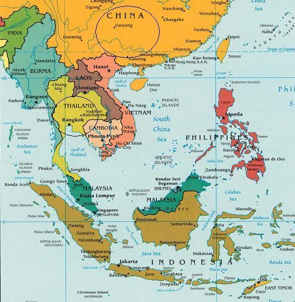
Lenovo already maintained major research facilities in the Asian region, including centres in Yamato, Japan, and Beijing, Shanghai and Shenzhen in China. During the third quarter of 2011, Lenovo reported strong growth and a global market share of approximately 10.2 percent. The original report also cites a Lenovo market share of approximately 32.2 percent in China and estimates that Lenovo’s share of the Thai computer market had increased from approximately 6 percent to 10 percent in 2011.
The Thai tablet market was, however, relatively new. Lenovo had introduced tablet products to both corporate and consumer segments, and the company’s ability to establish brand recognition and differentiate itself from established competitors remained important to its future performance.
- III. Demand Estimation
Lenovo entered the tablet market at a point when demand for mobile computing devices was expanding rapidly. Its Thai offering included the Android-powered IdeaPad K1 and ThinkPad Tablet. The ten-inch IdeaPad K1 supported Flash content, included more than 50 pre-installed applications and offered Lenovo’s cloud-storage service.
Lenovo’s product positioning was differentiated by target market. The IdeaPad K1 was aimed at consumers seeking mobile connectivity, while the ThinkPad Tablet was directed towards business professionals. In addition to applications available through Android Market, Lenovo users could access the Lenovo App Shop, which provided applications tested for Lenovo’s tablet products. At the time of the report, more than 200 Lenovo-exclusive applications were identified.
Lenovo’s positioning therefore combined hardware, software and service provision rather than relying solely on device specifications. This approach was intended to create a more complete user experience and to distinguish Lenovo’s products within a rapidly expanding market.
The Wi-Fi version of the IdeaPad K1 was priced at 16,900 baht including VAT, placing it in direct competition with Apple’s iPad. The report cites an estimated five-year compound annual growth rate of 54 percent for tablets in the Asia-Pacific region excluding Japan, with shipments projected to increase from approximately two million units in 2010 to 21 million units.
Demand was expected to come from activities such as gaming, web browsing and social networking. Education was identified as an additional source of demand. In particular, the Thai government’s announcement of a programme to distribute approximately 800,000 Android tablets to primary-school pupils represented a potentially significant source of additional market demand. The report notes that this initiative had not been incorporated into the cited market-growth forecast, indicating that the forecast may have understated the potential size of the market if the programme were implemented as proposed.
Taken together, these factors suggested that the Thai tablet market had several identifiable sources of potential demand: individual consumers, business users and the education sector. However, the market remained highly competitive, making price, brand recognition, distribution and application support important determinants of adoption.
- IV. Competition
Competition in Thailand’s tablet market was already substantial in 2011. Apple and Samsung were identified in the original report as the two principal competitors, through the iPad and Galaxy Tab respectively. Motorola and BlackBerry were also entering or expanding within the Thai tablet market.
The competitive environment was influenced not only by hardware specifications and price, but also by operating systems and application ecosystems. The principal platforms identified in the report were Apple’s operating system, Android and Windows. Apple’s system was exclusive to Apple hardware, whereas Android and Windows were available across products from multiple manufacturers. Lenovo’s decision to use Android gave its tablets access to a large application ecosystem as well as applications developed specifically for Lenovo devices.
The price comparison presented in the original report places the IdeaPad K1 at 16,900 baht including VAT. The accompanying comparison tables on page 4 show contemporary Thai-market prices for the iPad 2, Samsung Galaxy Tab 8.9 and BlackBerry PlayBook across different storage capacities. These figures indicate that Lenovo was attempting to compete within the established price range rather than positioning the K1 solely as a premium product.
The pricing strategy was therefore closely connected to Lenovo’s broader objective of increasing brand awareness while offering consumers a lower-cost alternative within a market dominated by well-established technology brands.
Price comparison with major tablet competitors in Thailand, 2011.
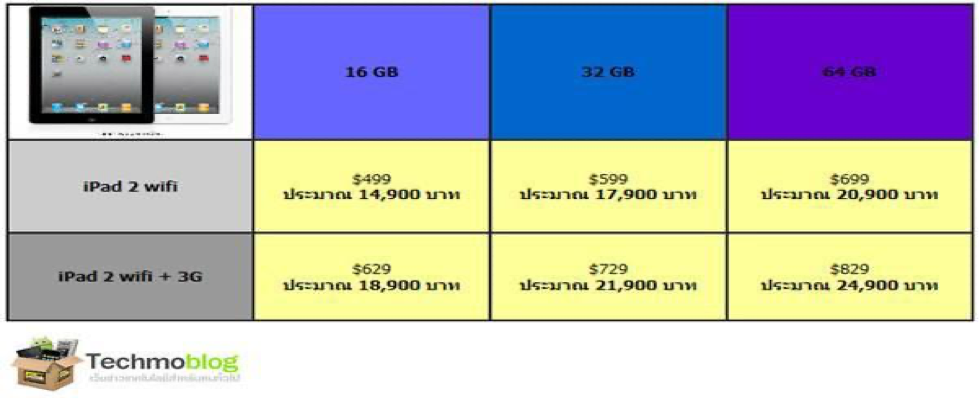
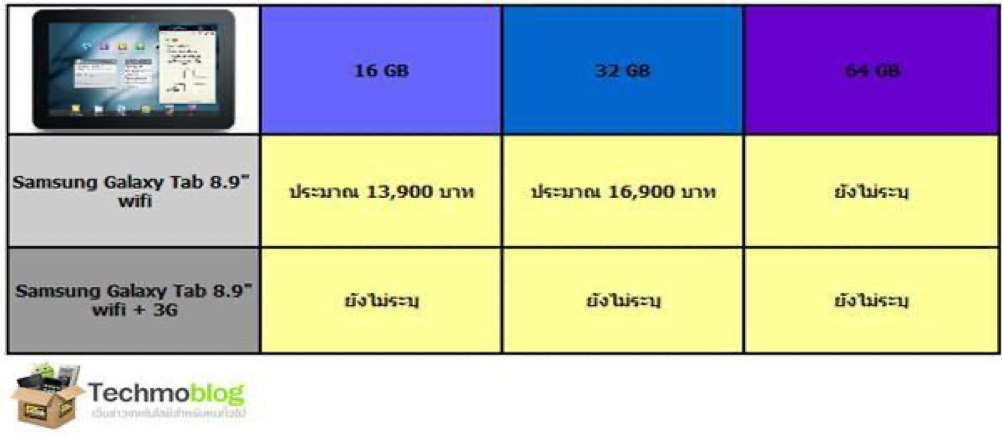
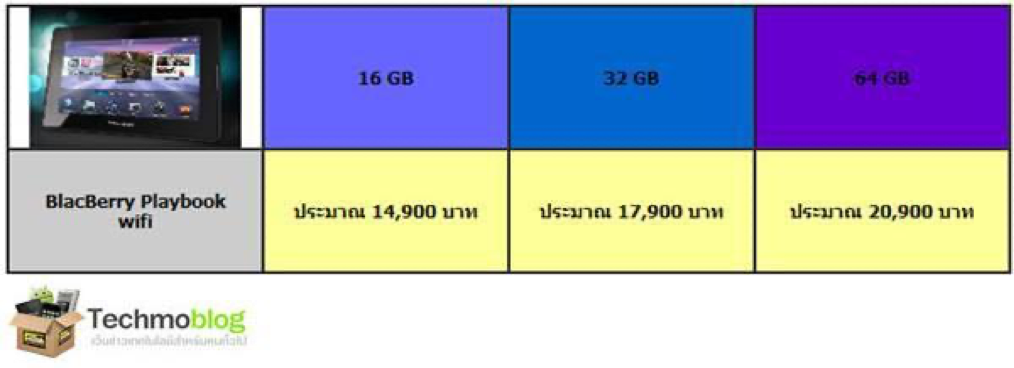
Based on the prices presented in the report, the IdeaPad K1 was positioned competitively against the principal tablet products identified in the Thai market. Price alone, however, would not determine market performance; Lenovo would also need to establish brand credibility, distribution, application support and customer awareness.
- V. Legal Environment
The ASEAN–China Free Trade Area (ACFTA), which came into effect for the relevant parties from 2010, was identified as an important factor in China–Thailand trade. The original report states that the agreement removed tariffs from a large proportion of consumer goods traded between China and the participating ASEAN countries, including tablet computers. This was considered favourable to the movement of Lenovo products from China into Thailand.
The report also states that tablet computers were not subject to Chinese export taxes. Taken together with the trade arrangements described above, this was considered to create a relatively favourable environment for importing Lenovo tablets from China into Thailand.
Intellectual-property protection was also relevant. The report notes the presence of counterfeit tablet products and the registration of important design features by established manufacturers. Lenovo would therefore need to ensure that its products, packaging and software complied with Thai intellectual-property requirements and did not infringe protected rights. The original report alleges uneven enforcement of anti-counterfeiting measures; this should be treated as an observation in the source material rather than as a generalised conclusion about government policy.
The standard rate of Thai value-added tax identified in the report was 7 percent, with VAT incorporated into retail prices. This was an important consideration for pricing and communication with retailers and consumers. The report found no additional special tax on tablets imported from China, which it regarded as another factor supporting the attractiveness of the Thai market.
From a market-entry perspective, the legal environment therefore appeared relatively favourable, although intellectual-property compliance, customs procedures and accurate treatment of VAT remained important operational requirements.
- VI. Monetary Environment and Financial Considerations
The global financial crisis was continuing to influence economic conditions in 2011, while Thailand was also dealing with the substantial economic disruption caused by nationwide flooding. The floods represented a significant short-term risk to infrastructure, supply chains and business continuity. For a company importing technology products, disruption to transport infrastructure could affect delivery schedules, inventory availability and costs.
The report also highlights the longer-term need to consider Thailand’s exposure to natural disasters and infrastructure constraints when assessing operational risk.
The report refers to the 1997 Asian financial crisis and the decision to float the baht as an important historical warning about currency and financial instability. For an importer operating across China and Thailand, exchange-rate movements could affect the cost of goods, margins and the value of capital transferred between the two markets.
According to the Bank of Thailand information cited in the original report, foreign currency could be transferred into or brought into Thailand subject to the applicable regulations, and residents and non-residents could maintain foreign-currency accounts under specified conditions. Such arrangements could provide businesses with additional flexibility in managing cross-border transactions and foreign-exchange exposure.
The report also discusses China’s exchange-rate policy and its implications for exporters. It argues that China’s currency policy supported the competitiveness of Chinese exports by limiting upward pressure on the renminbi. For Lenovo, which sourced products from China, this environment could help contain import costs in Thailand.
By 2011, China and Thailand had developed increasingly significant trading links. The report identifies China as a major trading partner of Thailand and notes continued growth in bilateral trade. These relationships supported the broader case for China-to-Thailand sourcing, while exchange-rate and macroeconomic risks remained relevant to financial planning.
VII. Cultural Environment
- Cultural Environment
An understanding of the Thai cultural environment was considered important to successful market entry. The original report describes Thai culture as having been influenced by several historical traditions, particularly those associated with Buddhism, Brahmanism and neighbouring Asian cultures. It identifies language, artistic and traditional cultural practices as important dimensions of Thai society.
For Lenovo, cultural understanding was relevant not only to advertising but also to relationships with distributors, business partners, employees and consumers. Marketing communications needed to be appropriate to local expectations and respectful of Thai cultural and religious values.
Language and communication
Thai is the principal language of Thailand and has developed through historical interaction with languages including Mon, Khmer, Pali, Sanskrit, Malay, Chinese and English. The report’s discussion of language highlights the importance of recognising the country’s distinctive linguistic and cultural context when communicating with Thai consumers.
Arts, religion and social traditions
The report also identifies architecture, literature, drama, music and religious traditions as important components of Thai cultural life. Buddhism is presented as having a particularly significant influence on social and ceremonial practices.
Family and traditional values
Traditional social relationships, including respect for parents, elders, teachers and monks, are highlighted in the report. Buddhist temples and religious practices are also described as important elements of community life and public ceremony. These considerations suggest that Lenovo’s communications should be locally sensitive and should avoid imagery or language that could be perceived as disrespectful to religion, national identity or established social values.
- VIII. Political and Economic Risks
Chinese Customs statistics cited in the report indicate that bilateral China–Thailand trade reached approximately US$52.95 billion in 2010, representing an increase of 38.6 percent. The report records Chinese exports to Thailand at approximately US$19.75 billion and imports from Thailand at approximately US$33.2 billion. The principal traded products included electrical machinery, computers and components, steel, machinery, chemicals and household goods, while Thailand supplied products including computers and components, rubber, crude oil, chemicals and agricultural products.
These figures illustrate the growing commercial relationship between the two countries and the relevance of China–Thailand trade to Lenovo’s proposed market strategy.
A. Political and investment risks
Thailand’s strategic location and transport infrastructure were identified as advantages for international business. At the same time, the report identifies political instability as a potential source of uncertainty. Changes in the political environment could influence investor confidence, administrative processes and the timing of approvals for major projects.
For Lenovo, the principal implication was the need to monitor political developments and avoid assuming that market conditions would remain unchanged throughout the investment period.
The report further identifies competition for investment in Thailand as a significant challenge. Companies from Japan, the United States, the European Union, South Korea, Singapore, Taiwan and Hong Kong were already active in the market. This meant that Chinese companies could face competition from businesses with established market relationships, financial resources and international experience.
These conditions reinforce the importance of detailed market research, reliable local partnerships and a realistic assessment of the competitive environment before committing significant resources.
B. Risk-mitigation measures
The report recommends undertaking comprehensive research into Thailand’s market conditions, legal framework, social environment and trading practices before entering the market. Particular attention should be given to consumer demand, the reliability of trading partners and the commercial conditions affecting the product category.
A second recommendation is the use of a localisation strategy. Local management and employees can provide knowledge of consumer expectations, business practices and regulatory conditions. The report argues that localisation can improve a company’s ability to respond to market changes, manage operations effectively and build competitiveness in the host country.
Finally, the report emphasises careful selection of local partners. Distributors, intermediaries and service providers should be assessed for their reputation, financial strength, market knowledge and ability to support Lenovo’s objectives. Establishing reliable local relationships would reduce operational risk and improve the company’s understanding of the Thai market.
IX. Transportation and Logistics
For a China-to-Thailand supply chain, maritime transport was identified as the principal method of moving tablet computers. The report describes two potential routes. The first involves movement through the Mekong River system from China’s Yunnan province towards Chiang Saen in northern Thailand. The second, and more conventional maritime route, follows the South China Sea and proceeds to ports in Thailand, particularly Laem Chabang and Klong Toei.
For relatively high-value electronic goods, route selection would need to balance cost, transit time, security and reliability.
Transit time
Transit time depended on the shipping route and the number of transhipments. The report gives examples from contemporary shipping services: Wan Hai Lines was reported to take approximately 14 days from Shanghai to Thailand via Hong Kong, while MCC Lines was reported to offer an approximately eight-day direct service from Shanghai to Laem Chabang. These figures are presented as examples from the 2011 logistics environment rather than as fixed transit times.
Transportation cost
Shipping costs were influenced by route length, the number of transhipments and demand for container capacity. The report notes that slower services could be less expensive and that the availability of container space could affect freight costs. These factors would need to be incorporated into Lenovo’s landed-cost calculations.
Cargo security
The security of electronic cargo was another consideration. The report notes that additional care was appropriate when loading and transporting tablet computers and raises concerns about security on the Mekong route following an October 2011 attack on a Chinese cargo vessel. The incident is used in the original report as evidence that route selection should take cargo security into account.
Logistics flexibility
China’s large number of logistics agencies and the international presence of major shipping companies could support the administrative requirements of export and import. The report cites Maersk as an example of a shipping company with logistics operations in multiple countries, illustrating how integrated logistics services could simplify documentation and customs procedures.
- X. Channels of Distribution
The tablet’s portability and connectivity made it relevant to business users and younger consumers interested in mobile technology. Following importation into Thailand, Lenovo could either undertake customs clearance directly or use a specialist clearing agent.
The report identifies major shopping centres and retail chains—including Tesco Lotus, Big C and The Mall—as potential distribution points. Shopping malls were considered particularly relevant because of their importance in Thai consumer retail behaviour. Traditional mass-media channels, including television, newspapers and magazines, were also identified as potential means of supporting distribution and consumer awareness.
- XI. Promotion
Education represented a potentially important promotional and sales channel. The Thai government’s proposed ‘One Tablet per Child’ policy involved a reported budget of approximately 1.2 billion baht and an intention to provide tablets to pupils. The report estimates that the programme could involve approximately 800,000 Android tablets. If implemented as proposed, such a programme could increase awareness of tablet technology and create opportunities for suppliers.
Lenovo was also reported to have planned an investment of approximately 200 million baht in Thailand, including advertising and activities intended to strengthen product visibility.
Lenovo’s ‘Are You Lenovo?’ campaign in Thailand was described as an integrated marketing communications initiative combining public relations, consumer activation, social media and advertising. Activities included public events and flash mobs in Bangkok and other Thai cities between January and April 2011, as well as promotion at shopping malls, information-technology exhibitions and universities.
The campaign was also supported by online activity, including the publication of event material on social-media platforms and YouTube. Television interviews with Lenovo executives were another component of the campaign. Taken together, these activities demonstrate an attempt to build brand familiarity rather than relying solely on product advertising.
Advertising in Thailand was subject to general requirements concerning accuracy and the avoidance of misleading or exaggerated claims, alongside specific cultural and legal sensitivities. The report highlights the importance of respecting the monarchy, national identity and religious traditions, including Buddhism and religious sites.
For Lenovo, promotional material therefore needed to combine the international identity of the brand with careful attention to Thai legal and cultural expectations.
Scope of the analysis. This revised report is intentionally historical. It retains the market conditions, forecasts, prices, policies and risks discussed in the original 2011 project and does not incorporate developments occurring after December 2011. Statements concerning forecasts or proposed government programmes are therefore presented as expectations or proposals existing at that time, rather than as established later outcomes.
References
Discover Asia, Thailand’s World (2011). “Thai Culture.” Asia’s World Publishing Limited. Retrieved 20 December 2011.
Diller, Anthony van Nostrand (2008). The Tai–Kadai Languages.
AsiaRooms (2011). “Culture of Thailand.” Retrieved 20 December 2011.
Thaiways (2011). “Thai Culture.” Retrieved 20 December 2011.
Ecoggins (2011). “Thailand Political and Economic Outlook 2011 and Beyond.” HubPages. Retrieved 20 December 2011.
Marshall, Andrew (Reuters) (2008). “Chaos hits Thailand’s investment image.” Retrieved 20 December 2011.
People’s Daily (2011). Source cited in the original report. Retrieved 15 December 2011.
Bank of Thailand (2011). Monetary Policy Committee minutes, cited in the original report. Retrieved 15 December 2011.
Australian Parliamentary Library (1998). Background material on the 1997 Asian financial crisis, cited in the original report. Retrieved 15 December 2011.
Bank of Thailand (2011). Foreign Exchange Regulations, cited in the original report. Retrieved 15 December 2011.
China Daily (2009). China–Thailand trade material cited in the original report. Retrieved 15 December 2011.
Thailand Business News (2011). China–Thailand trade material cited in the original report. Retrieved 15 December 2011.
15 December 2011 <http://thailand-business-news.com/china/29888-thailand-and-china-trade-raises-
- ← Previous
- 1
- 2
- 3
- 4
- Next →

