Tablet
Foreign Market Analysis
Lenovo Tablet: Thailand Market Assessment
23 December 2011
- I. Product
The Lenovo IdeaPad represents an emerging category of portable personal computing that was attracting considerable consumer and business interest in 2011. Its tablet format provides a lightweight, wireless alternative to the conventional laptop, combining portability with access to many of the functions associated with personal computers. The larger IdeaPad configuration discussed in the original report measures approximately 10.4 by 7.4 by 0.5 inches and weighs approximately 1.65 pounds.
Lenovo IdeaPad Tablet PC
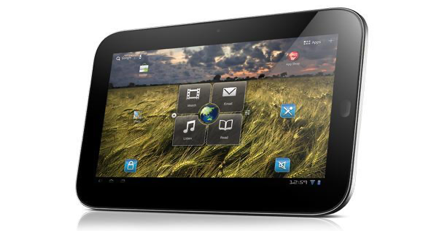
The tablet market was developing rapidly in 2011, with manufacturers introducing new models at increasingly competitive prices. In September 2011, Lenovo announced the IdeaPad A1, a seven-inch Android tablet priced at approximately US$199. The A1 weighs approximately 400 grams (0.88 pounds) and is less than half an inch thick. Its features include a high-definition display, dual cameras, Bluetooth and Wi-Fi connectivity, with 3G capability identified as an important emerging feature in the Thai market. The combination of lower price, portability and connectivity positioned the A1 within the growing market for affordable tablets.
Lenovo’s Thai strategy addressed both consumer and corporate markets. The ThinkPad Tablet was positioned toward business users, while the IdeaPad range was intended to appeal more broadly to consumers. The report identifies Thailand’s consumer segment as larger than the corporate segment, suggesting opportunities in both markets.
A further opportunity arose from cooperation with Thai software companies, system integrators and service providers. Lenovo intended to support applications for sectors including retail, telecommunications, airlines and banking. The development of locally relevant applications could increase the usefulness of the devices and help extend their commercial life cycle. The report also notes the planned expansion of Lenovo’s presence in Thailand and the availability of more than 1,000 applications through the Lenovo App Store at the time of the study.
In Thailand, Lenovo has launched its tablet computers on the corporate and consumer markets. The aim of Lenovo is to capture the corporate market, where embracing of these new tablets is expected to be big in 2012. The job for Lenovo in Thailand is to bring forth the brand name to make consumers aware of its product and build a reputation that makes consumers believe in the product. While the thinking of the typical user is on the corporate side of the business in Thailand, Lenovo has still covered both markets by having the Lenovo’s ThinkPad tablet for corporate users, while its IdeaPad tablet aims to attract consumers. Thailand has the attraction of an abundance of vendors that will promote the consumer segment. In actual fact, the consumer segment in Thailand is bigger than the corporate side, so there is room for both markets. The immerging market in Thailand, allows Thai software companies to work with Lenovo to enhance the product life cycle. Furthermore with Lenovo, although the standardized tablet will be sold, it will work with system integrators in Thailand and service providers to customize the devices and develop applications to support commercial users, such as retail, telecom, airline and banking solutions. With more Lenovo stores coming to Thailand, there will also be the offer more than 1,000 applications at the Lenovo App Store that have been certified as being fit for Lenovo‘s tablet devices.
- II. Geographic Description of the Market
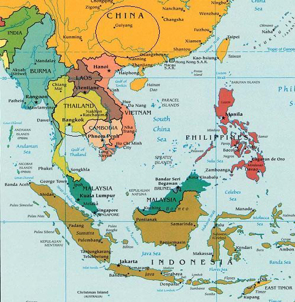
Thailand was identified as an attractive market because of its geographical position within Asia and its close trading relationship with China. Lenovo’s Chinese origins were considered relevant to the market opportunity because of the relatively short geographical distance between the two countries and their increasingly important commercial relationship.
Thailand also occupied a significant position within the wider Southeast Asian market. For Lenovo, the country offered an opportunity to build market share while strengthening its presence in a region experiencing rapid growth in demand for consumer technology.
Figure 1. Geographic relationship between China and Thailand.
Lenovo already maintained major research facilities in the Asian region, including centres in Yamato, Japan, and Beijing, Shanghai and Shenzhen in China. During the third quarter of 2011, Lenovo reported strong growth and a global market share of approximately 10.2 percent. The original report also cites a Lenovo market share of approximately 32.2 percent in China and estimates that Lenovo’s share of the Thai computer market had increased from approximately 6 percent to 10 percent in 2011.
The Thai tablet market was, however, relatively new. Lenovo had introduced tablet products to both corporate and consumer segments, and the company’s ability to establish brand recognition and differentiate itself from established competitors remained important to its future performance.
- III. Demand Estimation
Lenovo entered the tablet market at a point when demand for mobile computing devices was expanding rapidly. Its Thai offering included the Android-powered IdeaPad K1 and ThinkPad Tablet. The ten-inch IdeaPad K1 supported Flash content, included more than 50 pre-installed applications and offered Lenovo’s cloud-storage service.
Lenovo’s product positioning was differentiated by target market. The IdeaPad K1 was aimed at consumers seeking mobile connectivity, while the ThinkPad Tablet was directed towards business professionals. In addition to applications available through Android Market, Lenovo users could access the Lenovo App Shop, which provided applications tested for Lenovo’s tablet products. At the time of the report, more than 200 Lenovo-exclusive applications were identified.
Lenovo’s positioning therefore combined hardware, software and service provision rather than relying solely on device specifications. This approach was intended to create a more complete user experience and to distinguish Lenovo’s products within a rapidly expanding market.
The Wi-Fi version of the IdeaPad K1 was priced at 16,900 baht including VAT, placing it in direct competition with Apple’s iPad. The report cites an estimated five-year compound annual growth rate of 54 percent for tablets in the Asia-Pacific region excluding Japan, with shipments projected to increase from approximately two million units in 2010 to 21 million units.
Demand was expected to come from activities such as gaming, web browsing and social networking. Education was identified as an additional source of demand. In particular, the Thai government’s announcement of a programme to distribute approximately 800,000 Android tablets to primary-school pupils represented a potentially significant source of additional market demand. The report notes that this initiative had not been incorporated into the cited market-growth forecast, indicating that the forecast may have understated the potential size of the market if the programme were implemented as proposed.
Taken together, these factors suggested that the Thai tablet market had several identifiable sources of potential demand: individual consumers, business users and the education sector. However, the market remained highly competitive, making price, brand recognition, distribution and application support important determinants of adoption.
- IV. Competition
Competition in Thailand’s tablet market was already substantial in 2011. Apple and Samsung were identified in the original report as the two principal competitors, through the iPad and Galaxy Tab respectively. Motorola and BlackBerry were also entering or expanding within the Thai tablet market.
The competitive environment was influenced not only by hardware specifications and price, but also by operating systems and application ecosystems. The principal platforms identified in the report were Apple’s operating system, Android and Windows. Apple’s system was exclusive to Apple hardware, whereas Android and Windows were available across products from multiple manufacturers. Lenovo’s decision to use Android gave its tablets access to a large application ecosystem as well as applications developed specifically for Lenovo devices.
The price comparison presented in the original report places the IdeaPad K1 at 16,900 baht including VAT. The accompanying comparison tables on page 4 show contemporary Thai-market prices for the iPad 2, Samsung Galaxy Tab 8.9 and BlackBerry PlayBook across different storage capacities. These figures indicate that Lenovo was attempting to compete within the established price range rather than positioning the K1 solely as a premium product.
The pricing strategy was therefore closely connected to Lenovo’s broader objective of increasing brand awareness while offering consumers a lower-cost alternative within a market dominated by well-established technology brands.
Price comparison with major tablet competitors in Thailand, 2011.
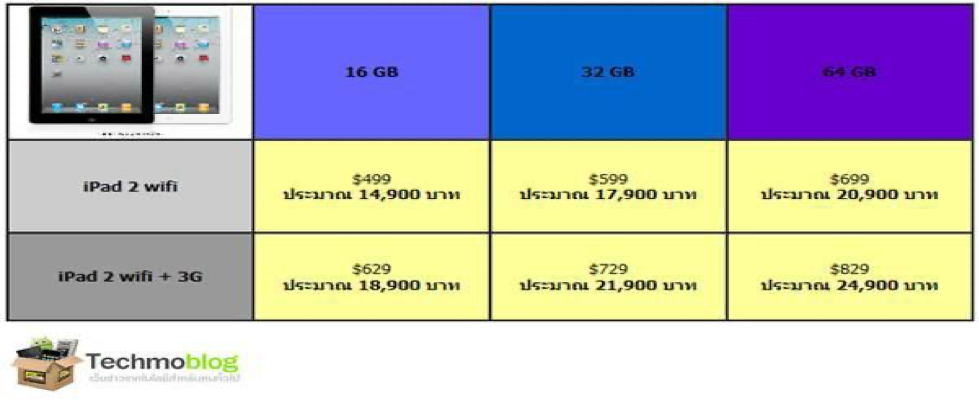
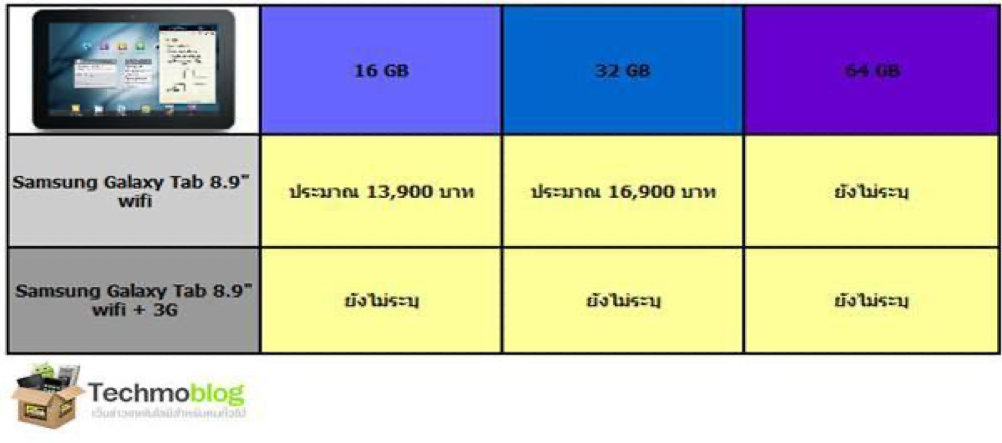
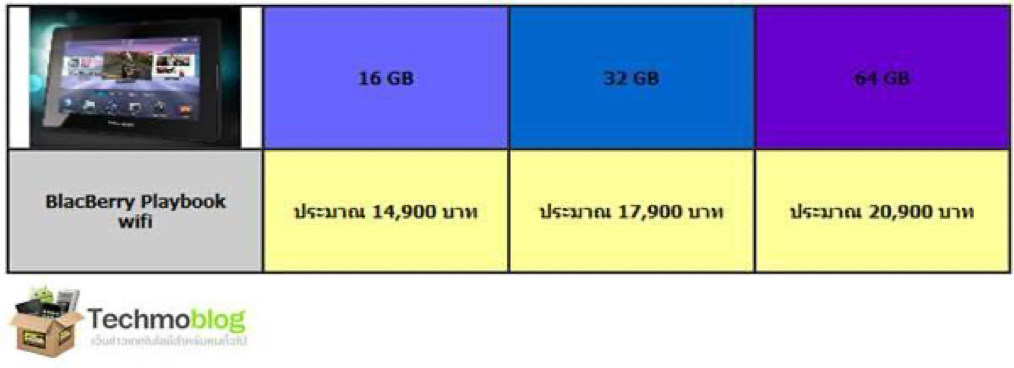
Based on the prices presented in the report, the IdeaPad K1 was positioned competitively against the principal tablet products identified in the Thai market. Price alone, however, would not determine market performance; Lenovo would also need to establish brand credibility, distribution, application support and customer awareness.
- V. Legal Environment
The ASEAN–China Free Trade Area (ACFTA), which came into effect for the relevant parties from 2010, was identified as an important factor in China–Thailand trade. The original report states that the agreement removed tariffs from a large proportion of consumer goods traded between China and the participating ASEAN countries, including tablet computers. This was considered favourable to the movement of Lenovo products from China into Thailand.
The report also states that tablet computers were not subject to Chinese export taxes. Taken together with the trade arrangements described above, this was considered to create a relatively favourable environment for importing Lenovo tablets from China into Thailand.
Intellectual-property protection was also relevant. The report notes the presence of counterfeit tablet products and the registration of important design features by established manufacturers. Lenovo would therefore need to ensure that its products, packaging and software complied with Thai intellectual-property requirements and did not infringe protected rights. The original report alleges uneven enforcement of anti-counterfeiting measures; this should be treated as an observation in the source material rather than as a generalised conclusion about government policy.
The standard rate of Thai value-added tax identified in the report was 7 percent, with VAT incorporated into retail prices. This was an important consideration for pricing and communication with retailers and consumers. The report found no additional special tax on tablets imported from China, which it regarded as another factor supporting the attractiveness of the Thai market.
From a market-entry perspective, the legal environment therefore appeared relatively favourable, although intellectual-property compliance, customs procedures and accurate treatment of VAT remained important operational requirements.
- VI. Monetary Environment and Financial Considerations
The global financial crisis was continuing to influence economic conditions in 2011, while Thailand was also dealing with the substantial economic disruption caused by nationwide flooding. The floods represented a significant short-term risk to infrastructure, supply chains and business continuity. For a company importing technology products, disruption to transport infrastructure could affect delivery schedules, inventory availability and costs.
The report also highlights the longer-term need to consider Thailand’s exposure to natural disasters and infrastructure constraints when assessing operational risk.
The report refers to the 1997 Asian financial crisis and the decision to float the baht as an important historical warning about currency and financial instability. For an importer operating across China and Thailand, exchange-rate movements could affect the cost of goods, margins and the value of capital transferred between the two markets.
According to the Bank of Thailand information cited in the original report, foreign currency could be transferred into or brought into Thailand subject to the applicable regulations, and residents and non-residents could maintain foreign-currency accounts under specified conditions. Such arrangements could provide businesses with additional flexibility in managing cross-border transactions and foreign-exchange exposure.
The report also discusses China’s exchange-rate policy and its implications for exporters. It argues that China’s currency policy supported the competitiveness of Chinese exports by limiting upward pressure on the renminbi. For Lenovo, which sourced products from China, this environment could help contain import costs in Thailand.
By 2011, China and Thailand had developed increasingly significant trading links. The report identifies China as a major trading partner of Thailand and notes continued growth in bilateral trade. These relationships supported the broader case for China-to-Thailand sourcing, while exchange-rate and macroeconomic risks remained relevant to financial planning.
VII. Cultural Environment
- Cultural Environment
An understanding of the Thai cultural environment was considered important to successful market entry. The original report describes Thai culture as having been influenced by several historical traditions, particularly those associated with Buddhism, Brahmanism and neighbouring Asian cultures. It identifies language, artistic and traditional cultural practices as important dimensions of Thai society.
For Lenovo, cultural understanding was relevant not only to advertising but also to relationships with distributors, business partners, employees and consumers. Marketing communications needed to be appropriate to local expectations and respectful of Thai cultural and religious values.
Language and communication
Thai is the principal language of Thailand and has developed through historical interaction with languages including Mon, Khmer, Pali, Sanskrit, Malay, Chinese and English. The report’s discussion of language highlights the importance of recognising the country’s distinctive linguistic and cultural context when communicating with Thai consumers.
Arts, religion and social traditions
The report also identifies architecture, literature, drama, music and religious traditions as important components of Thai cultural life. Buddhism is presented as having a particularly significant influence on social and ceremonial practices.
Family and traditional values
Traditional social relationships, including respect for parents, elders, teachers and monks, are highlighted in the report. Buddhist temples and religious practices are also described as important elements of community life and public ceremony. These considerations suggest that Lenovo’s communications should be locally sensitive and should avoid imagery or language that could be perceived as disrespectful to religion, national identity or established social values.
- VIII. Political and Economic Risks
Chinese Customs statistics cited in the report indicate that bilateral China–Thailand trade reached approximately US$52.95 billion in 2010, representing an increase of 38.6 percent. The report records Chinese exports to Thailand at approximately US$19.75 billion and imports from Thailand at approximately US$33.2 billion. The principal traded products included electrical machinery, computers and components, steel, machinery, chemicals and household goods, while Thailand supplied products including computers and components, rubber, crude oil, chemicals and agricultural products.
These figures illustrate the growing commercial relationship between the two countries and the relevance of China–Thailand trade to Lenovo’s proposed market strategy.
A. Political and investment risks
Thailand’s strategic location and transport infrastructure were identified as advantages for international business. At the same time, the report identifies political instability as a potential source of uncertainty. Changes in the political environment could influence investor confidence, administrative processes and the timing of approvals for major projects.
For Lenovo, the principal implication was the need to monitor political developments and avoid assuming that market conditions would remain unchanged throughout the investment period.
The report further identifies competition for investment in Thailand as a significant challenge. Companies from Japan, the United States, the European Union, South Korea, Singapore, Taiwan and Hong Kong were already active in the market. This meant that Chinese companies could face competition from businesses with established market relationships, financial resources and international experience.
These conditions reinforce the importance of detailed market research, reliable local partnerships and a realistic assessment of the competitive environment before committing significant resources.
B. Risk-mitigation measures
The report recommends undertaking comprehensive research into Thailand’s market conditions, legal framework, social environment and trading practices before entering the market. Particular attention should be given to consumer demand, the reliability of trading partners and the commercial conditions affecting the product category.
A second recommendation is the use of a localisation strategy. Local management and employees can provide knowledge of consumer expectations, business practices and regulatory conditions. The report argues that localisation can improve a company’s ability to respond to market changes, manage operations effectively and build competitiveness in the host country.
Finally, the report emphasises careful selection of local partners. Distributors, intermediaries and service providers should be assessed for their reputation, financial strength, market knowledge and ability to support Lenovo’s objectives. Establishing reliable local relationships would reduce operational risk and improve the company’s understanding of the Thai market.
IX. Transportation and Logistics
For a China-to-Thailand supply chain, maritime transport was identified as the principal method of moving tablet computers. The report describes two potential routes. The first involves movement through the Mekong River system from China’s Yunnan province towards Chiang Saen in northern Thailand. The second, and more conventional maritime route, follows the South China Sea and proceeds to ports in Thailand, particularly Laem Chabang and Klong Toei.
For relatively high-value electronic goods, route selection would need to balance cost, transit time, security and reliability.
Transit time
Transit time depended on the shipping route and the number of transhipments. The report gives examples from contemporary shipping services: Wan Hai Lines was reported to take approximately 14 days from Shanghai to Thailand via Hong Kong, while MCC Lines was reported to offer an approximately eight-day direct service from Shanghai to Laem Chabang. These figures are presented as examples from the 2011 logistics environment rather than as fixed transit times.
Transportation cost
Shipping costs were influenced by route length, the number of transhipments and demand for container capacity. The report notes that slower services could be less expensive and that the availability of container space could affect freight costs. These factors would need to be incorporated into Lenovo’s landed-cost calculations.
Cargo security
The security of electronic cargo was another consideration. The report notes that additional care was appropriate when loading and transporting tablet computers and raises concerns about security on the Mekong route following an October 2011 attack on a Chinese cargo vessel. The incident is used in the original report as evidence that route selection should take cargo security into account.
Logistics flexibility
China’s large number of logistics agencies and the international presence of major shipping companies could support the administrative requirements of export and import. The report cites Maersk as an example of a shipping company with logistics operations in multiple countries, illustrating how integrated logistics services could simplify documentation and customs procedures.
- X. Channels of Distribution
The tablet’s portability and connectivity made it relevant to business users and younger consumers interested in mobile technology. Following importation into Thailand, Lenovo could either undertake customs clearance directly or use a specialist clearing agent.
The report identifies major shopping centres and retail chains—including Tesco Lotus, Big C and The Mall—as potential distribution points. Shopping malls were considered particularly relevant because of their importance in Thai consumer retail behaviour. Traditional mass-media channels, including television, newspapers and magazines, were also identified as potential means of supporting distribution and consumer awareness.
- XI. Promotion
Education represented a potentially important promotional and sales channel. The Thai government’s proposed ‘One Tablet per Child’ policy involved a reported budget of approximately 1.2 billion baht and an intention to provide tablets to pupils. The report estimates that the programme could involve approximately 800,000 Android tablets. If implemented as proposed, such a programme could increase awareness of tablet technology and create opportunities for suppliers.
Lenovo was also reported to have planned an investment of approximately 200 million baht in Thailand, including advertising and activities intended to strengthen product visibility.
Lenovo’s ‘Are You Lenovo?’ campaign in Thailand was described as an integrated marketing communications initiative combining public relations, consumer activation, social media and advertising. Activities included public events and flash mobs in Bangkok and other Thai cities between January and April 2011, as well as promotion at shopping malls, information-technology exhibitions and universities.
The campaign was also supported by online activity, including the publication of event material on social-media platforms and YouTube. Television interviews with Lenovo executives were another component of the campaign. Taken together, these activities demonstrate an attempt to build brand familiarity rather than relying solely on product advertising.
Advertising in Thailand was subject to general requirements concerning accuracy and the avoidance of misleading or exaggerated claims, alongside specific cultural and legal sensitivities. The report highlights the importance of respecting the monarchy, national identity and religious traditions, including Buddhism and religious sites.
For Lenovo, promotional material therefore needed to combine the international identity of the brand with careful attention to Thai legal and cultural expectations.
Scope of the analysis. This revised report is intentionally historical. It retains the market conditions, forecasts, prices, policies and risks discussed in the original 2011 project and does not incorporate developments occurring after December 2011. Statements concerning forecasts or proposed government programmes are therefore presented as expectations or proposals existing at that time, rather than as established later outcomes.
References
Discover Asia, Thailand’s World (2011). “Thai Culture.” Asia’s World Publishing Limited. Retrieved 20 December 2011.
Diller, Anthony van Nostrand (2008). The Tai–Kadai Languages.
AsiaRooms (2011). “Culture of Thailand.” Retrieved 20 December 2011.
Thaiways (2011). “Thai Culture.” Retrieved 20 December 2011.
Ecoggins (2011). “Thailand Political and Economic Outlook 2011 and Beyond.” HubPages. Retrieved 20 December 2011.
Marshall, Andrew (Reuters) (2008). “Chaos hits Thailand’s investment image.” Retrieved 20 December 2011.
People’s Daily (2011). Source cited in the original report. Retrieved 15 December 2011.
Bank of Thailand (2011). Monetary Policy Committee minutes, cited in the original report. Retrieved 15 December 2011.
Australian Parliamentary Library (1998). Background material on the 1997 Asian financial crisis, cited in the original report. Retrieved 15 December 2011.
Bank of Thailand (2011). Foreign Exchange Regulations, cited in the original report. Retrieved 15 December 2011.
China Daily (2009). China–Thailand trade material cited in the original report. Retrieved 15 December 2011.
Thailand Business News (2011). China–Thailand trade material cited in the original report. Retrieved 15 December 2011.
15 December 2011 <http://thailand-business-news.com/china/29888-thailand-and-china-trade-raises-

