I did not mean it like that! Language at its best (or worst).
(972 Words)
Language works in many ways and what someone says may well not truly get to the core of their true meaning or the point they were trying to get across while at the same time the receiver is stumped or takes offense. In the piece of writing, I will try to explain that the English language has many meanings, descriptions, and stumblings that we wonder how someone was actually trying to make their point and did they (or others)really know what they were saying.
In a famous Bertrand Russell’s sentence construction, we can see that we do not hold consistent opinions on facts. On a BBC program in the 1940s, Russell conjugated an “irregular verb” as “I am firm; you are obstinate; he is a pig-headed fool.” These constructions provide excellent illustrations of the varying emotional associations of words and the empathy of meaning.
What Russell was illustrating was the power of words to convey attitudes (connotations) as well as meanings (denotations).
Moreover, think about the following statements and how they convey their meanings: I am sexually adventurous, you are promiscuous, he is a slut.
We recognise connotation as ‘the emotional implications and associations that a word may carry’ and denotation as ‘the direct or dictionary meaning of a word’.
Dog = man’s best friend (connotation)Dog = four legged animal (denotation)
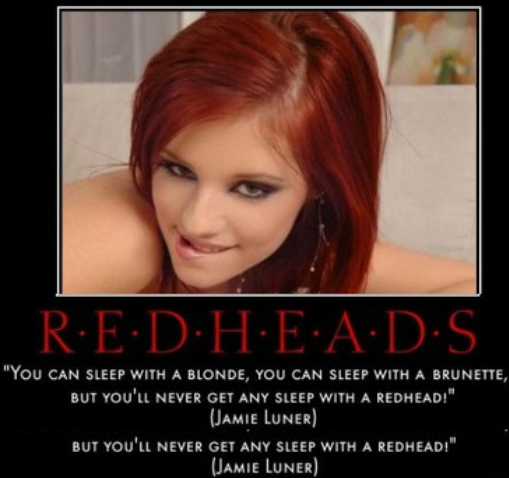
In an age where people are highly sensitive to what is said about religion, ethnicity, or even sexuality, antiquated stereotypes of someone’s hair colour can still emanate one’s perception of a person. Passing statements are said without true acknowledgement. Epithets to categorise people can be totally unacceptable. You only have to look at the examples below to see this.

But, language can work in reverse where a supposedly openly offensive word like ‘fuck’ cannot actually have the denoted meaning. For example, Bono upon receiving an award at the Golden Globes in 2003 exclaimed that it was ‘fucking brilliant’. Now, was this use of the expletive word offensive, or was it just an exclamation of the excitement at winning the award? It cannot be indecent as what is more than ‘brilliant’ without the punch in the statement he wanted.
So, do we take statements to actually mean what they say? Bono was telling us how excited and thrilled he was to win an award. What he was saying encapsulated that moment and the literal meaning came across clearly. It is strange in that case that the Federal Communication Commission reasoned that the word had no connotation other than referring to the act of fornication, and was therefore always indecent. Go figure! Well, George Callin did.
(If you are easily offended, I would advise you not to watch the George Carlin video)
So, language does not have any connotation we should take it literally all the time. Is that right?
For example, during the final days at Denver’s old Stapleton airport, a crowded United flight was cancelled.
The single agent was re-booking a long line of very inconvenienced and frustrated travellers. Suddenly an angry passenger pushed his way to the desk in front of all the others. He slapped his ticket down on the counter and said, “I HAVE to be on this flight and it has to be FIRST CLASS.”
The agent replied, “I’m sorry sir. I’ll be happy to try to help you, but I’ve got to help these folks first, and I’m sure we’ll be able to work something out.”
The passenger was unimpressed. He asked loudly so that all the passengers behind him could hear, “Do you have any idea who I am?”
Without hesitating, the gate agent smiled warmly and grabbed her public address microphone. “May I have your attention please?” she began, her voice bellowing throughout the entire terminal. “We seem to have a passenger here at the gate WHO DOES NOT KNOW WHO HE IS. If anyone can help him find his identity, please come forward to the gate.”
With the folks behind him in line now laughing hysterically, the man glared at the United agent, gritted his teeth, and spat out the words, “F… you.”
Without flinching in the least, the agent smiled politely and said, “I’m terribly sorry, sir, but I’m afraid that you’ll have to stand in line for that, too.”
We have to understand that language comes at us on multiple levels, rather than as a direct parse of the content of the sentence. In everyday life, we anticipate our interlocutor’s ability to listen between the lines and slip in requests and offers we feel we can’t blurt out directly (Pinker, 2008).
But, one has to be careful. A famous sketch from the Seinfeld show highlights the gravity of taking what someone says too literally.
So why don’t we say what we actually mean? Would it not just get out of the way all this politeness and double meaning? Why spend minutes or hours getting round to the point of the conversation?
Whimpertaives are another example of us going through the motions of being polite and less direct. People prefer to be asked nicely although it does take away the power of the person saying the statement or asking the question. Still, it would be better if a person was on a dinner date to be on their best behaviour where a sense of decorum prevailed. However, statements or questions can be overstretched.
Can you…..? (a stupid question)
I was wondering if… (a pointless rumination)
It would be great if you could… (a gross overstatement)
Politeness keeps people placated. A person can really be too blunt as if they were bossing someone about but what if we came out with what we really meant, would it not expose too much? Ricky Gervais’ Invention of Lying shows us how it is done.
References:


.

